Evening Cravings Sober: Why Nights Are the Hardest
Written by Jakub Havelka
Software engineer · 10+ years in recovery · Author of the Craving Toolkit
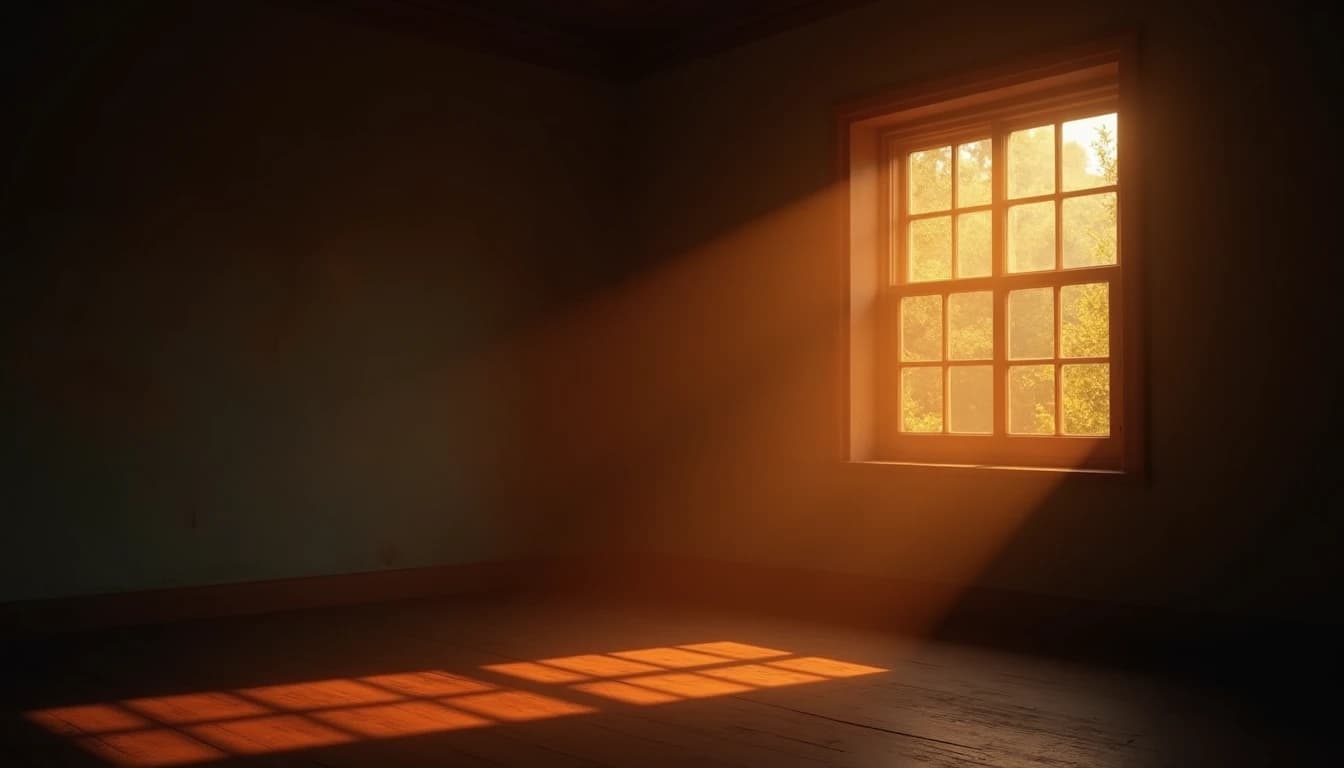
The dishes are done. The kids are asleep, or there are no kids. The work laptop is closed. The light outside has gone the color of old bronze. And something inside you sits up and starts looking around.
This is the hour. Not midnight, not 3 AM. The dangerous hour in sober life is usually somewhere between dinner and bed, when the day's structure dissolves and the evening stretches out empty in front of you.
If you are new to sobriety and you have noticed that mornings feel manageable but evenings feel like a slow-motion ambush — you are not unusual. You are running into the most predictable trigger window in addiction recovery.
Why does sobriety get harder when the sun goes down?
Charles Duhigg, in The Power of Habit, describes how every habit is built on a cue — a specific time, place, emotional state, preceding action, or social context — that tells your brain to deploy a stored routine. For most people who drank or used at home, the cue was not a single thing. It was a cluster that arrived together every evening: work ending, the front door closing behind you, fatigue, lowered self-control, the silence, the screen, the chair you always sat in.
Your brain spent years learning that this cluster predicts the substance. Now you have removed the substance. But the cluster still arrives, on time, every night.
The cue fires. The craving surges. And nothing has filled the space the routine used to occupy.
That gap is what evenings feel like in early recovery.
There is a second factor stacked on top. Willpower behaves like a muscle, and by evening it is depleted from a full day of decisions, restraint, and emotional regulation. The same urge that you could shrug off at 11 AM has the run of the house at 9 PM. This is why evening relapses are so common even among people who held the line all day. They didn't fail at sobriety. They ran out of the resource sobriety was costing them.
What is actually happening in your brain at dusk?
The Craving Toolkit puts it plainly: a craving can feel bigger than logic. The author notes that the urge often arrives without drama — "Maybe it is evening. Maybe you are tired. Maybe you are alone. Maybe the old ritual starts whispering before you consciously notice it."
That whisper is the anticipatory pull Duhigg describes — the dopamine signal your brain learned to fire when the cue showed up, before any actual consumption. Judson Brewer, in The Craving Mind, writes about this same loop from a clinical neuroscience angle: the cue triggers a pull toward the routine before the conscious mind has a vote. The drink isn't poured yet. The thought is already moving. By the time you notice you are thinking about it, the bargaining has already started.
This is why "just don't drink tonight" doesn't work as a strategy. It is asking the conscious, deliberate part of your brain to outvote a system that started voting two hours ago, on autopilot, while you were still finishing dinner.
You don't beat the evening with resolve. You beat it with structure.
How do you build an evening that doesn't end in relapse?
The principle Duhigg draws from AA's success — keep the cue, provide the same reward, insert a new routine — is the most useful frame for evening recovery I have come across. You are not trying to make the cue disappear. You can't. The evening will keep arriving. What you can change is what runs in the slot the substance used to fill.
Start by mapping what the substance was actually giving you at night. This is the part most people skip, and it is the part that makes everything else work.
Decompression. A clear signal that the workday is over and the body is allowed to relax.
Permission to do nothing. The drink or the substance was the social contract you made with yourself that the productive part of the day was done.
A buffer against loneliness. Especially if you live alone, the substance was company.
A buffer against the brain itself. If your thoughts get loud at night, the substance was a volume knob.
Ritual structure. The preparation, the consumption, the comedown — a shape that organized the evening hours that would otherwise have been formless.
You do not need to replace all of these with one thing. You need a small set of new evening behaviors that, between them, deliver these rewards. This is the same logic that drives the habit loop — keep the cue, swap the routine, honor the reward.
What actually works in the evening danger window
These are not aspirational. They are the moves I leaned on, and the moves I have seen work for others. Pick two or three. Pre-load them so they require no decision when the cue fires.
Eat earlier and eat enough. Low blood sugar at night intensifies cravings, and many people in recovery have built a pattern of skipping or under-eating dinner because alcohol used to take the place of calories. A real meal at a real time is a structural intervention, not a wellness suggestion. If you are noticing intense sugar cravings after quitting alcohol, this is part of why.
Move the bedtime up. The hours between dinner and sleep are the most dangerous in your day. Shortening them directly reduces exposure. Aim for an earlier bedtime than feels normal, especially in the first months. Sleep is non-negotiable in recovery, and a longer night is a shorter danger window.
Insert a transition ritual. The drink used to be the bell that signaled "work mode is off." You need a different bell. A shower right after work. Changing into specific clothes. A 15-minute walk around the block before you enter the house. The ritual matters less than its consistency. You are teaching your nervous system a new way to cross the threshold.
Schedule the lonely hours. If you live alone, the unstructured stretch between 7 and 10 PM is where most slips happen. Put something in it. A meeting, in person or online. A standing call with a friend. A class. A volunteer shift. It does not need to be every night. It needs to cover the worst nights.
Have a script for the urge. Not "I will resist." Something specific. When the craving hits, I will drink a large glass of water, do twenty squats, and text my accountability person the word "wave." This is the kind of pre-loaded plan that holds when willpower has nothing left.
Make the substance physically distant. Empty the house. Don't keep "just one bottle for guests." Cravings find what is in reach. Refusing to white-knuckle past a full bottle every night isn't weakness — it's strategy. The opposite, white-knuckling sobriety, is the approach that breaks people.
None of this is clever. It is all just structure that still holds when motivation has already left the building.
What if the evenings feel unbearably empty?
They will, for a while. The boredom is real, and it has a name and a mechanism. Your reward system is recalibrating after years of artificially high stimulation, and ordinary evenings — a book, a walk, a quiet meal — feel grayer than they used to.
This phase is described well in the article on why sobriety feels boring. The shortest version: it is temporary, it is a sign of healing, and the answer is not to seek a new high-intensity stimulus but to keep showing up to the low-intensity life until your brain remembers how to find pleasure in it again.
In the meantime, treat the boredom the way you would treat physical pain after surgery. You don't need to make it disappear. You need to get through it without doing damage.
The Craving Toolkit puts it as a list of small, unglamorous moves: drink water, leave the trigger, eat before you spiral, call someone before the binge — not after. None of it is dramatic. All of it works.
When the urge hits anyway
Sometimes the structure holds and the craving still rises. That is not a sign the structure failed. It is a sign that this is what recovery feels like — built defenses, plus surges that test them.
When the surge arrives, your job shrinks. Not "stay sober forever." Not "build a new identity." Just: get through the next ten minutes without feeding it. Then the next ten. Then bed.
If you are in acute crisis or unsure whether you can hold the line tonight, the SAMHSA National Helpline is free and confidential at 1-800-662-4357. It is staffed 24/7. Calling is not weakness. It is the move.
The evening is not your enemy. It is just the hour your old self was loudest in. Your new self is quieter, but it is also more honest, and it gets stronger every night you make it through without the drink.
One ugly evening at a time. That is how this works.
Sources
- Duhigg C. The Power of Habit: Why We Do What We Do in Life and Business. Random House, 2012. - Brewer JA. The Craving Mind: From Cigarettes to Smartphones to Love. Yale University Press, 2017. - Craving Toolkit. cravingtoolkit.com. - Substance Abuse and Mental Health Services Administration (SAMHSA) National Helpline: 1-800-662-4357.
The Craving Toolkit includes a printable Evening Plan worksheet — a fill-in template for mapping your danger window, identifying the rewards you were really chasing, and pre-loading the new routines that fill the slot.
Frequently Asked Questions
- Why do cravings get worse at night when I'm sober?
- Your brain learned to associate evening with reward. The cue isn't darkness itself — it's the cluster of conditions that arrived nightly: end of work, lowered guard, fatigue, solitude, the unstructured hours. The cue still fires even after you stop. Until you build a new evening pattern, the old one keeps reaching for you.
- How long do evening cravings last in sobriety?
- The acute spike usually softens over the first weeks to months as the old cue-routine pathway weakens through disuse. But evening vulnerability can return during stress, fatigue, or travel for a long time. Treat the evening slot as a permanent area of structural attention, not a phase you graduate from.
- Should I just go to bed early to avoid evening cravings?
- Yes — earlier bedtime is one of the most underrated tools in early recovery. The hours between dinner and sleep are where most relapses incubate. Shortening that window directly reduces exposure. Pair it with a wind-down routine, because lying in bed wired and bored is its own trigger.
- What if I live alone and evenings feel unbearable?
- Solitude amplifies the cue, but you can engineer around it. Schedule evening calls. Attend in-person or online meetings during the danger window. Eat with someone, even on video. If you're in crisis, SAMHSA's helpline is 1-800-662-4357, free and 24/7. The goal isn't to never be alone — it's to never be alone and unstructured at the worst hour.
- Why does the craving feel worse on a 'good' day?
- Because the old reward was often a celebration as much as an escape. Your brain encoded drinking or using as the way you marked the end of a day — any kind of day. Good days trigger the ritual just as reliably as bad ones. Plan for both.