What to Do After a Relapse: The First Hour and Beyond
Written by Jakub Havelka
Software engineer · 10+ years in recovery · Author of the Craving Toolkit
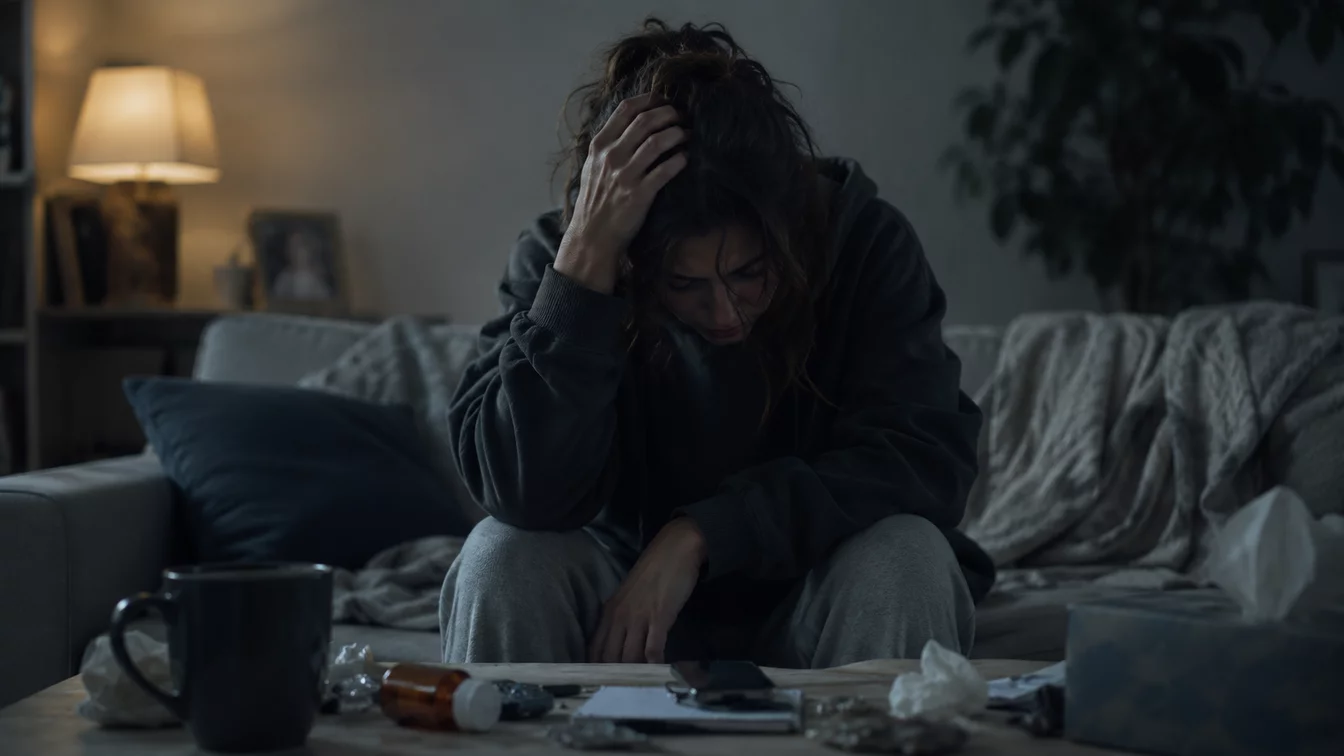
The relapse already happened. You are reading this with a hangover, a comedown, a half-empty bottle in the kitchen, or the residue of whatever pattern you swore you were done with. Your hands might be shaking. Your phone is full of messages you do not want to read. The streak counter is broken.
Stop here for a moment.
What you do in the next hour matters more than what you did last night. The damage from a single slip is usually small. The damage from how you respond to the slip is what turns a bad night into a lost month.
Here is what to do now.
What do I do in the first hour?
The single most important rule, the one that decides whether this becomes a slip or a full collapse: stop the sequence fast.
Addiction loves momentum. One drink wants two. One hit wants the rest. One binge wants the weekend. The bargaining voice will tell you that since the streak is already broken, you may as well keep going until Monday, until your birthday, until you have "really hit bottom." That voice is the addiction protecting its territory. Do not negotiate with it.
Here is the order of operations I learned in rehab, and the same order that appears across nearly every clinical relapse-prevention protocol:
Remove access. Pour out what is left. Hand it to someone. Leave the bar. Walk out of the apartment. Block the dealer's number. Delete the app. Put physical distance between yourself and the trigger right now, not after one more.
Stabilize the body. Drink water. Eat something with protein and salt. Take a shower if you can. If you are coming off alcohol, benzodiazepines, or opioids and you feel withdrawal starting, this is a medical situation — call SAMHSA at 1-800-662-4357 or go to an emergency room. Withdrawal from alcohol and benzos can be dangerous.
Tell one person. Sponsor, partner, therapist, recovery friend. Short, factual, no speech. "I used. I have stopped. I need you to check on me tonight." Saying it out loud breaks the secret, and the secret is what would have powered the next round.
Refuse the shame ritual. No long monologue about how worthless you are. No declaration that recovery does not work for you. No social media post. Self-hatred and accountability look similar from the outside, but accountability leads to corrective action and self-hatred leads to escape — usually back to the substance.
If you do nothing else tonight, do those four things in that order.
The first hour is not where you fix your life. It is where you keep one event from becoming ten.
How do I handle the shame?
Shame is the most dangerous emotion in recovery, more dangerous than craving. Craving is loud and obvious. Shame is quiet and corrosive, and it almost always leads back to the substance — because the substance is exactly what used to silence shame.
Gabor Maté, in In the Realm of Hungry Ghosts, describes a patient named Sean who relapses on heroin after months at a recovery home. Sean keeps avoiding his family because, in his words, "they've helped me so much, and I turned around and failed so miserably." The shame of having let people down kept him from the very people who could have helped him stop the relapse from extending. Maté's point is sharp: addiction is, by definition, characterized by relapses. A lapse is not proof that recovery cannot work for you. It is proof that you are doing the thing recovery is for.
There is a useful distinction here that the Craving Toolkit hammers on:
Accountability says: I made a dangerous move; now I need interruption and honesty immediately.
Shame says: I already failed, so it does not matter what I do next.
Notice that shame is the voice that wants you to keep using. Accountability is the voice that wants you to stop. They are not the same emotion in different clothes. They are opposing forces. Choose accountability and act on it; let the shame pass through without obeying it.
You do not need to feel okay about what happened. You need to take the next correct action despite not feeling okay.
How do I figure out what went wrong?
Not tonight. Tonight you stabilize. Within a few days, when your nervous system has settled, sit down and do the review — not to convict yourself, but to gather data.
A relapse is almost never a single moment. It is the visible end of a chain that started days or weeks earlier. Understanding the three stages of relapse — emotional, mental, and physical — helps you see where the chain actually started. The drink was the last link, not the first.
Walk yourself backward through the timeline:
The behavior. What exactly did you use, how much, where, with whom. Specific. No vague language.
The hour before. What were you doing, thinking, feeling. Who texted. What you ate. Whether you had slept.
The day before. What rituals did you skip. What resentment did you sit on. What HALT state — hungry, angry, lonely, tired — were you ignoring.
The week before. What protective structures had been weakening. Missed meetings. Skipped exercise. Dropped check-ins. A growing sense of "I've got this now."
By the time you finish, the relapse usually looks less like a freak accident and more like a small, predictable result of a chain you could have interrupted earlier. That is good news. Predictable means preventable next time.
If sitting with this feels unbearable, you do not need to do it alone. A sponsor, therapist, or trained counselor can walk you through it with less self-attack and more honesty. The point is information, not punishment.
Do I have to start over from day one?
This is one of the most quietly damaging beliefs in recovery culture — that a relapse resets you to zero and erases everything you built.
It does not.
The neural and behavioral changes from months of recovery do not vanish in one night. The skills you learned, the relationships you rebuilt, the self-knowledge you accumulated, the new daily patterns — all of it is still encoded. The streak counter resets. The brain does not.
What does change is your physical tolerance. If you have been clean for months and you used your old amount, your body cannot handle what it used to. This is how overdoses kill people who thought they knew their dose. Treat your post-relapse body as if it has the tolerance of someone who has never used. That is roughly accurate, and it is the safer assumption.
What also changes, if you let it, is your understanding of your own pattern. A relapse you study honestly teaches you more about your triggers than a year of unbroken sobriety can. The relapse is data. Painful, expensive, sometimes catastrophic data — but data.
Some people in long-term recovery describe their last relapse as the event that finally made the rest of recovery stick. That is not a reason to relapse on purpose. It is a reason not to let this one be wasted.
What about the long week ahead?
The week after a relapse is fragile. The neural pathways that fired during the slip are freshly active. Cues are sharper. The bargaining voice is louder. This is when most second relapses happen — not from a new trigger, but from the wake of the first one.
A few moves that buy you the week:
Over-correct on structure. Daily meetings, daily contact with a sober person, daily writing. More than you think you need. Loosen later.
Pre-load the next craving. When the next urge hits — and it will, probably tonight — you need a plan that does not require willpower in the moment. The protocol in how to survive the first 10 minutes of a craving is built for exactly this window.
Watch for the empty hours. Boredom and unstructured time are where post-relapse slips breed. If you have not built boredom tolerance yet, fill the hours with planned activity until you have.
Sleep. Exhausted brains relapse. Protect sleep like a medical prescription.
No major decisions for a week. Do not quit your job. Do not break up with your partner. Do not move cities. Do not declare yourself a lifelong relapser. Your judgment is impaired by guilt right now. Decisions made in this state tend to be wrong.
If the relapse was serious — a return to a previously dangerous level, withdrawal symptoms, suicidal thinking, or a pattern you cannot interrupt — return to a higher level of care. Outpatient if you were unsupported. Intensive outpatient if you were in outpatient. Inpatient if you were in IOP. This is not a punishment. It is the right tool for a harder week. SAMHSA's helpline at 1-800-662-4357 will connect you with local options at no cost.
You are not back at zero. You are at a hard chapter in a longer book.
Close the chapter honestly. Do not burn the book.
Sources
- Maté G. In the Realm of Hungry Ghosts: Close Encounters with Addiction. North Atlantic Books, 2010. - Melemis SM. "Relapse Prevention and the Five Rules of Recovery." Yale J Biol Med. 2015;88(3):325-332. PubMed - SAMHSA. National Helpline: 1-800-662-HELP (4357). https://www.samhsa.gov/find-help/helplines/national-helpline - Marlatt GA, Donovan DM, eds. Relapse Prevention: Maintenance Strategies in the Treatment of Addictive Behaviors. 2nd ed. Guilford Press, 2005.
The Craving Toolkit includes a printable Post-Slip Protocol — a one-page sheet you keep where you can find it before the next bad night, so your calm self has already prepared your triggered self.
Frequently Asked Questions
- Is one slip the same as a full relapse?
- Not necessarily. A slip is a single event you interrupt quickly. A relapse is when the slip turns into a return to old patterns — a binge, a weekend, a renewed habit. The difference is almost entirely what you do in the hours after the first use. Stop the sequence fast and a slip stays a slip.
- Should I go back to rehab or treatment?
- If the relapse involved high-risk substances, withdrawal symptoms, suicidal thoughts, or a pattern you cannot interrupt alone, yes — return to treatment or call SAMHSA at 1-800-662-4357. If it was a single slip you stopped quickly, intensified outpatient support, a sponsor, or therapy may be enough. When in doubt, get a professional opinion the same week.
- How do I tell my sponsor or family I relapsed?
- Tell them quickly, before shame builds a story. Short, factual, no performance: I used. Here is what happened. Here is what I am doing next. Most people who love you have been bracing for this conversation. Honesty restores the relationship faster than a perfect-looking streak ever did.
- How do I stop feeling like a failure?
- Separate accountability from self-hatred. Accountability looks at what happened and adjusts the plan. Self-hatred convinces you that you are broken — and broken people often use again to numb the verdict. Gabor Maté notes that addiction is by definition characterized by relapses. A lapse is not proof that recovery does not work for you.
- Do I lose all my progress when I relapse?
- No. The neural changes built over months of recovery do not disappear in one night. Your tolerance may have dropped, which is a medical risk worth knowing — but the skills, the relationships, the self-knowledge, and the new patterns are still there. You are not starting over. You are continuing from a hard chapter.