Anger in Early Sobriety: Why You're Furious and What Helps
Written by Jakub Havelka
Software engineer · 10+ years in recovery · Author of the Craving Toolkit
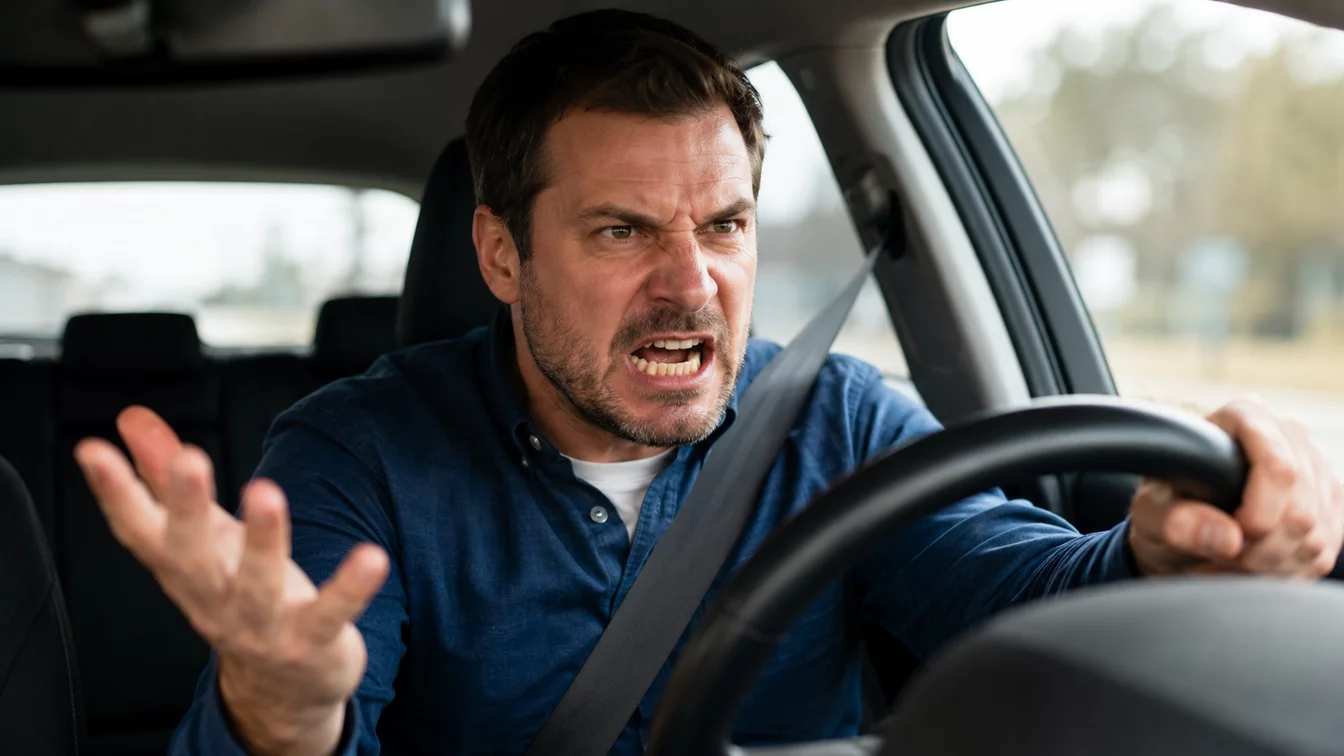
You are three weeks sober and you just yelled at someone in traffic for a thing that didn't matter. Your hands are shaking. Your jaw hurts from clenching. The smallest interruption — a slow checkout line, a partner asking what's for dinner, a notification — feels like a personal attack.
You did not sign up for this. You quit the substance. You expected to feel better. Instead, you feel like a live wire.
This is not a sign that recovery is failing. This is a sign that the anesthetic is wearing off.
Why does sobriety make you so angry?
The cleanest framing comes from the addiction-recovery clinicians at Monument: anger isn't caused by quitting. Anger emerges because you quit. Alcohol and drugs were doing emotional labor for you — flattening fear, smoothing resentment, postponing grief. When you take that chemical away, the feelings it was suppressing don't politely wait their turn. They come back online all at once.
Erica Spiegelman, in The Rewired Life, describes this as a finite process — rage that has been stored for years finally getting out of your system. She is direct about it: there should be no fear that anger is never-ending. You survived what produced it. You are now in the phase of getting healthier. The anger is not a new problem. It is an old problem becoming visible.
There is also a physiological layer. Gabor Maté, in In the Realm of Hungry Ghosts, describes how chronic stress produces a nervous system with elevated baseline arousal — easily triggered, easily flooded. People who used substances to manage that arousal are not exaggerating when they say sobriety feels harder than other people seem to find it. Their nervous system is starting from a hotter place. The substance was lowering the temperature. Now the thermostat is uncovered.
Add the rest of it — disrupted sleep, depleted dopamine, social losses, the emptiness of evenings that used to be structured around using — and you get a person whose nervous system is stripped of every stabilizer it had learned to rely on.
You are not a worse person sober. You are a more honest one.
How long does the rage last?
Acute irritability tends to fade over the first weeks. The longer-tail emotional volatility — what clinicians call post-acute withdrawal — can stretch on for months, especially with alcohol and benzodiazepines. There is no fixed timetable. Sleep quality, stress load, trauma history, and whether you are doing actual recovery work all shift the curve.
What is more useful than a calendar is recognizing the pattern: anger comes in waves. The waves get smaller. The space between them gets longer. Six months in, you will have stretches of equanimity that would have been unimaginable in week three.
But you have to get through week three to find that out.
Why is anger especially dangerous in early recovery?
Because it recreates the exact internal state the substance used to fix.
Maté is blunt that stress and emotional distress are the most predictable triggers for relapse. The body remembers what worked. When rage floods your system, every neural pathway you spent years carving is screaming the same instruction: this is what we use the thing for. The craving doesn't feel like a craving in that moment. It feels like clarity. It feels like the obvious solution.
This is why white-knuckling sobriety tends to break down around emotional spikes rather than during quiet stretches. You can grind through boredom. Rage will hijack you.
The rule that has saved more sobriety than any single technique: no decisions while activated. No confrontations. No texts you cannot un-send. No purchases. No quitting your job. No leaving your relationship. No calling your dealer. The activated brain will tell you that this is the moment of perfect clarity. It is not. It is the moment of maximum distortion.
If you feel the surge, your first move is to delay. Anything else is downstream.
What actually helps in the moment
Anger is a body event before it is a mental one. The fastest interventions are physical.
Discharge through movement. Anger is mobilized energy. If you do not give it somewhere to go, it gives itself somewhere to go — usually into a person you love. Drop and do push-ups until your arms shake. Sprint up stairs. Punch a heavy bag. Carry something heavy. Spiegelman is clear that letting the rage out, in safe ways, is what makes room in the mind for calmer states. The energy has to leave the body. This is the same logic behind the strong counter-action approach to cravings — physical effort interrupts the automatic loop.
Name it out loud. "I am furious right now. I am not going to act on this." Saying it activates the part of your brain that observes rather than reacts. The neuroscience word is interoception. The rehab word is "calling it." Either way, naming the state shrinks it.
Cool the body. Cold water on your face. A walk in the cold. A shower turned cold for the last thirty seconds. Cold input shifts your nervous system out of fight-or-flight faster than reasoning with yourself does.
Get away from the person. Most catastrophic recovery damage happens to relationships, and most of it happens during a window of fewer than ten minutes. If you can leave the room, leave the room. "I love you. I need fifteen minutes. I will be back." This is not avoidance. This is harm reduction.
Sleep. Almost no one rages well-rested. If you have been sleeping four hours, your anger is partly a sleep symptom, and the intervention is in the bedroom, not the conversation.
You do not need to feel calm. You need to not act.
Anger versus resentment — and why the difference matters
Acute anger is a surge. It rises, peaks, and falls. The body discharges it, time metabolizes it, and the episode ends.
Resentment is anger that has moved in. It is the same emotion, but rehearsed — replayed in your mind, attached to a story, kept warm by repetition. Maté describes how Isabella, one of his patients, had stored years of unspoken resentment toward her husband — never asserted, never expressed, just compounding. The resentment was not the original emotion. It was the original emotion plus years of silent rehearsal.
Resentment does not respond to push-ups. It responds to writing, to honest conversation, to therapy, to step work, to anything that interrupts the rehearsal loop and lets the underlying feeling actually move.
If you find yourself replaying the same grievance for the fourth time today — that is resentment, not anger. The intervention is different. You need to write it out, talk it through with someone who can hold it, or work it with a clinician. Letting it sit will not resolve it. It will just keep simmering until something cracks.
Acute anger asks for movement. Resentment asks for words.
When to bring in professional help
Self-management has a ceiling. If you are scaring people you love, breaking things, driving dangerously, or having intrusive thoughts about hurting someone — that is not early sobriety, that is a crisis, and it needs more than a worksheet.
Persistent rage past the first few months often points to something underneath: untreated trauma, undiagnosed depression, ADHD that was being self-medicated, a personality structure shaped by long-ago abuse. Substances were the lid. Sobriety lifted the lid. What is underneath needs its own treatment.
In the United States, SAMHSA's National Helpline at 1-800-662-4357 is free, confidential, and available around the clock. They can connect you to local treatment, including dual-diagnosis programs that handle anger and substance use together. If you are in immediate danger of hurting yourself or someone else, call or text 988.
Asking for help is not a failure of recovery. It is recovery.
What this phase actually is
You are not turning into a worse person. You are meeting yourself without the chemical buffer for the first time in a long time. The anger you feel now was being paid for, with interest, by the substance. The bill came due when you stopped paying it that way.
Spiegelman's reassurance is worth holding onto: the rage is finite. It will get out of your system. The mind that feels overrun right now will, with time and practice, become a place with room in it again — for hope, for spontaneity, for the kind of presence you forgot was possible.
You are not the anger. You are the person it is moving through on its way out.
Sources
- Spiegelman E. The Rewired Life: Remarkable Transformations from Negative Thinking to Positive Outcomes. Hatherleigh Press, 2018. - Maté G. In the Realm of Hungry Ghosts: Close Encounters with Addiction. North Atlantic Books, 2010. - Substance Abuse and Mental Health Services Administration. National Helpline: 1-800-662-HELP (4357). SAMHSA.gov - Monument. "Handling Anger in Early Sobriety." joinmonument.com.
The Craving Toolkit includes a full chapter on emotional regulation in early recovery — plus printable worksheets for tracking activation states, mapping resentments, and pre-committing decisions your calm self has already made for your triggered self.
Frequently Asked Questions
- Why am I so angry in early sobriety?
- Because the substance was doing emotional labor for you. Alcohol and drugs blunt fear, grief, shame, and resentment. When you stop, those feelings come back online — often all at once, often without warning. The anger isn't new. It was already there, just chemically muted for years.
- How long does irritability last when you quit drinking?
- Acute irritability tends to fade over the first weeks, but post-acute symptoms — including emotional volatility — can linger for months. Timelines vary by substance, dose history, sleep, and stress load. If rage stays disabling past the first few months, that's a signal to involve a clinician, not to white-knuckle harder.
- Can anger trigger a relapse?
- Yes. Anger and resentment are among the most consistent relapse triggers because they recreate the exact emotional state the substance used to fix. The danger isn't the feeling — it's acting on it while activated. Build a rule: no decisions, no confrontations, no purchases when your nervous system is hot.
- What's the difference between anger and resentment in recovery?
- Anger is acute — a surge that rises and falls. Resentment is anger that has moved in and unpacked. Acute anger responds to physical discharge and time. Resentment requires deliberate work — usually writing, talking, or therapy — because it's anger married to a story your mind keeps rehearsing.
- When should I get professional help for anger?
- If you're scaring people you love, breaking things, driving aggressively, or fantasizing about violence — get help now. Call SAMHSA's National Helpline at 1-800-662-4357 for free, confidential treatment referrals. Persistent rage often signals untreated trauma, depression, or a co-occurring condition that recovery alone won't resolve.