First Sober Christmas: How to Get Through It Intact
Written by Jakub Havelka
Software engineer · 10+ years in recovery · Author of the Craving Toolkit
It is December 24th. The tree is up, the kitchen smells like butter and cinnamon, and someone has already opened the first bottle of wine at 4 PM. Last year, you would have been on your second glass by now. This year, you are standing in the kitchen with a glass of sparkling water and a low hum of panic in your chest, wondering how you are going to make it through the next 72 hours without drinking.
This article is for that exact moment.
Your first sober Christmas is not a holiday. It's an operation. Treat it that way and you will get through it. Treat it like a normal Christmas and trust that "you'll be fine," and the cue density of the season will pull you under before December 26th.
The good news is that this is a known problem with a known structure. People in recovery have been surviving sober Christmases for a hundred years. The work is mostly done in advance, not in the moment.
Why is the first sober Christmas so hard?
Because almost every cue that ever told your brain to drink is going to fire in the same week.
Charles Duhigg, in The Power of Habit, breaks habits into a loop of cue, routine, reward — with a craving holding the whole thing together. Christmas does something cruel: it stacks the cues. The smell of the kitchen at your parents' house. The specific armchair your uncle drinks in. The song that was playing the year everything fell apart. The sister-in-law who has been pressing your buttons since 2008. The unstructured afternoon. The dark at 4:30 PM. The drink your father always poured you "to start the evening." Each one is a learned trigger, and your brain has been quietly rehearsing them for decades.
In a normal week, you face maybe two or three significant cues. Over Christmas, you face dozens, often inside the same house, often with alcohol literally on every surface.
Layer on top of that the things that make any human brain more reactive: poor sleep, sugar, financial stress, family conflict, broken routine, and travel. Gabor Maté, in In the Realm of Hungry Ghosts, writes about Sean, his patient who relapsed after months at a recovery home with the thought I'll just use one time. That sentence is the Christmas sentence. It is the one your brain will offer you, dressed up as harmless, somewhere between Christmas Eve and New Year's Day.
You are not weak for finding this week hard. The week is hard.
What do I do before December 24th?
Most of the work of a sober Christmas happens in the two weeks before it. Your calm self has to prepare your triggered self. Once the lights are on and the wine is open, your decision-making bandwidth drops, so the decisions need to already be made.
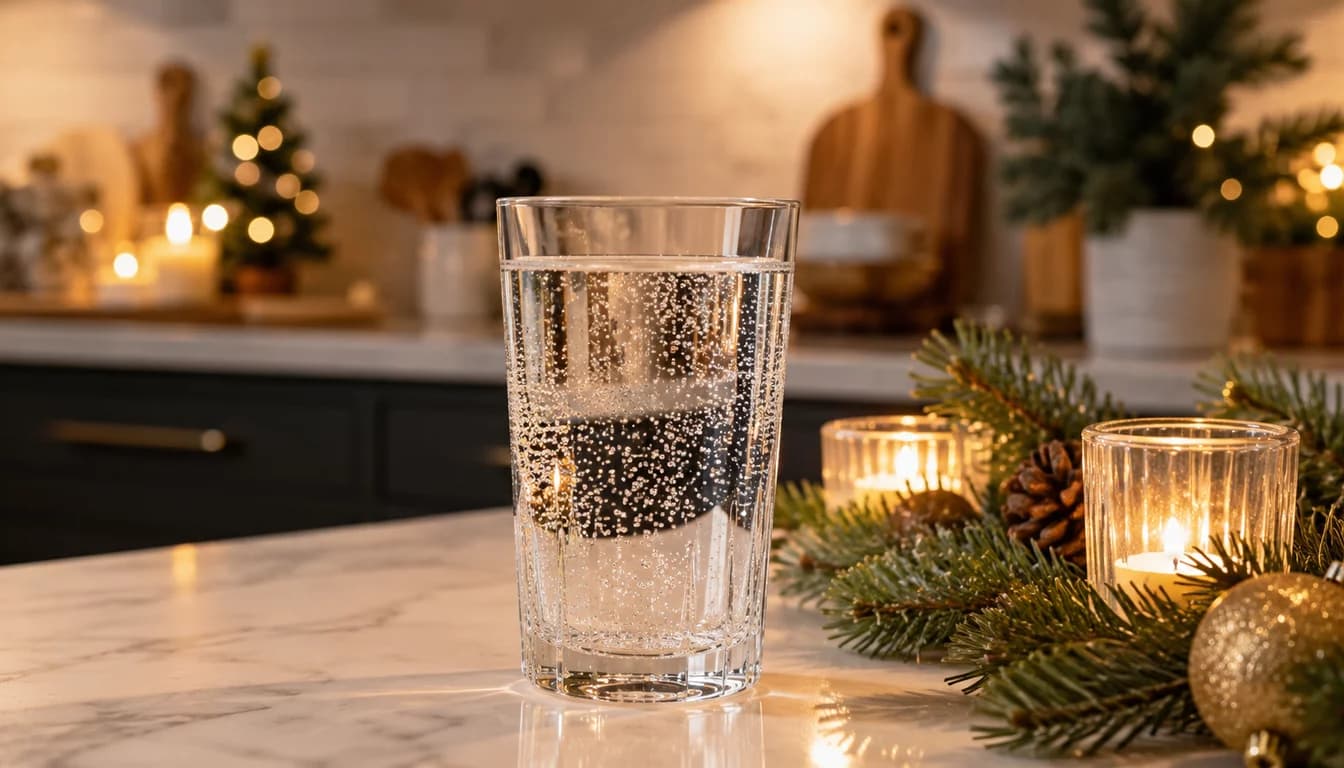
Decide what you will drink, before you arrive. Pick one non-alcoholic drink you actually like and bring it with you. Sparkling water with bitters and lime. Alcohol-free beer if it doesn't trigger you (it triggers some people; you know which camp you're in). The point is not the drink — the point is having something in your hand at all times, so you are never the only empty-handed adult in the room.
Write your refusal script and memorize it. One sentence. "No thanks, I'm off it this year." Or "I'm driving." Or "I'm on medication." You will repeat this sentence maybe twenty times over Christmas. Do not improvise. People who improvise refusals end up drinking. If you want longer scripts for the close people in your life, there are versions worth rehearsing.
Pre-book your support. Find the meetings running on December 24th, 25th, 26th, and 31st. AA, NA, SMART, online — whatever you use. Put them in your calendar with a reminder. Tell one person in recovery that you may call them between specific hours. If you are not in a fellowship, identify a sober friend or family member and ask them, in writing, to be your contact person for the week. People say yes to specific asks.
Plan your exits. For every event, decide before you arrive: what time you will leave, how you will get home, and what you will say. "I have to be up early" works for any event, for any reason. Drive yourself or arrange your own ride. Being trapped at a party because someone else has the keys is how first sober Christmases end badly.
Eat and sleep. Low blood sugar and sleep debt are two of the most reliable amplifiers of craving. Holiday weeks routinely destroy both. Eat a real meal before parties. Protect your sleep window even when everyone else is staying up.
Pre-commitment is not paranoia — it's the difference between getting through and getting hit.
How do I get through the actual day?
Christmas Day itself splits into predictable danger zones: the morning, the long afternoon, the meal, the evening, and the quiet hours after everyone has gone to bed.
The morning is usually safe. The afternoon is where it cracks. There is a stretch between the gifts being opened and dinner being served — three or four hours of unstructured time, often with people drinking and you suddenly with nothing to do. This is the gap where your brain offers you the "just one" thought.
Fill the gap on purpose. Go for a walk, ideally outside, ideally alone for at least part of it. Have a specific task you've committed to — peeling potatoes, taking the dog out, helping a kid build a Lego set. A small responsibility is a powerful anchor. Idle hands in a room full of bottles are a setup.
During the meal, sit somewhere you can leave easily. Keep your non-alcoholic drink in front of you. If toasts happen, raise your glass — the toast does not care what is in it. If you start to feel the pull, excuse yourself for five minutes. Bathrooms exist for this reason. Splash cold water on your face. Text your contact person one line: I'm at dinner, the urge is up, I'm not drinking. The act of naming it to another human shrinks it.
The evening, after the meal, is often the second hard stretch. People are sentimental, slightly drunk, and likely to bring up things you don't want to talk about. This is the moment your exit plan earns its keep. Leave when you said you would leave. You don't have to outlast anyone. You just have to not drink.
The quiet hours afterward — back home, alone, lights off — are where some people are most vulnerable. The day is over, the adrenaline drops, and the absence of an old ritual gets very loud. If this is your danger window, plan it. A late call to a sober friend. A movie queued up. A meeting on Zoom. Going to bed earlier than feels natural. This is also where drinking dreams show up later in the week — disturbing but not predictive.
You don't need to enjoy Christmas. You need to not drink on Christmas.
What about family pressure and the "just one drink" people?
Some families respect a quiet "no thanks." Others treat it as an opening bid.
You will get the relative who tells you one glass of wine never hurt anyone. You will get the cousin who says you were more fun before. You will get the parent who is genuinely hurt that you won't toast with them. None of this is new behavior — it's old behavior meeting new boundaries.
Three rules. First, you do not owe an explanation. "I'm not drinking this year" is a complete sentence. Second, repetition beats argument. The same calm sentence, said five times, ends almost every push. Third, if a specific person reliably destabilizes you, limit your exposure to them. You can love someone and still not sit next to them at dinner during your first sober Christmas.
If your family is the type where the alcohol itself is the problem — bottles in every room, drunkenness as the baseline — consider whether you need to be there at all, or whether you need to be there for fewer hours than tradition demands. A shorter visit you survive is better than a longer one that ends in relapse. Your sobriety outranks the seating chart.
You are allowed to protect your recovery, even on Christmas Day.
What if I relapse?
If you drink, you have not destroyed your recovery. You have generated information.
Stop the bleeding the same day. Leave the environment. Eat. Drink water. Sleep. In the morning, write down the cue chain — where you were, who you were with, what you felt in the ten minutes before the first drink, what story your brain told you. That sequence is the map you need for next Christmas, and for next Tuesday.
Then call someone. A sponsor, a friend in recovery, a therapist, a helpline. If you are in the US and don't know who else to call, SAMHSA's National Helpline is 1-800-662-4357. It is free, confidential, and answered on Christmas Day. If you are coming off a heavy drinking pattern and feel physically unwell — shaking, sweating, confused — go to an emergency room. Alcohol withdrawal can be medically serious.
Shame is the engine of the second relapse, not the first. Get back into structure within 24 hours. Find a meeting on December 26th. Don't wait for January 1st to count again — January 1st is a marketing date, not a recovery one.
After Christmas: the New Year stretch
The week between Christmas and New Year's is its own animal. Routines are still broken, alcohol is still everywhere, and now there's a culturally-sanctioned excuse to drink heavily on December 31st. Plan that night with the same care you planned Christmas Eve. Many people in recovery skip New Year's parties entirely for the first year or two. That is not failure. That is competence.
Use the early days of January to rebuild the structure that the holidays dismantled. Sleep window, meetings, exercise, food. Reconnect with the people you may have leaned on less while you were traveling. If you came through Christmas sober, you have proof — your own proof, in your own body — that you can do the hardest week of the year without drinking. Most weeks are easier than this one. Some of the work ahead is rebuilding social life around people who knew you before; if that part feels barren, start building a sober social circle on purpose.
The first sober Christmas is not the holiday you remember from childhood and it is not the holiday you'll have in five years. It is a passage. You are awake for it. That is the entire point.
You will not enjoy every minute. You will remember every minute. That is already different.
Sources
- Duhigg C. The Power of Habit: Why We Do What We Do in Life and Business. Random House, 2012. - Maté G. In the Realm of Hungry Ghosts: Close Encounters with Addiction. North Atlantic Books, 2010. - Substance Abuse and Mental Health Services Administration (SAMHSA). National Helpline: 1-800-662-HELP (4357). samhsa.gov/find-help/national-helpline
The Craving Toolkit includes a printable Holiday Survival Plan worksheet — exits, scripts, contact list, and danger-hour mapping — designed to be filled out before you walk into the house.
Frequently Asked Questions
- Is it normal to feel sad or anxious during your first sober Christmas?
- Yes. Holidays surface grief, family wounds, and the loss of an old coping ritual all at once. Sadness and anxiety are not signs you are failing recovery; they are signs you are finally awake for the parts of the year you used to numb. Plan for the feelings instead of being ambushed by them.
- What do you say when someone offers you a drink?
- Keep it short and pre-rehearsed. "No thanks, I'm off it this year" or "I'm driving" or "I'm on medication" all work. You owe no one a recovery monologue at a Christmas party. If they push, repeat the same sentence and change the subject. Repetition wins these conversations, not justification.
- What are the biggest relapse triggers during Christmas?
- Unstructured time, family conflict, financial stress, sleep loss, and being around people who only know your drinking self. Add free-flowing alcohol at every gathering and the cue density is unusually high. Most relapses over Christmas are not dramatic — they're a small decision made when you were tired, alone, and unprepared.
- Should I tell my family I quit drinking?
- You decide how much to disclose, and to whom. Telling one trusted person ahead of time gives you an ally in the room. Telling the whole extended family is optional and can wait. If you want a script for the close people, see [how to tell friends you quit drinking](/articles/how-to-tell-friends-i-quit-drinking).
- What if I relapse on Christmas Day?
- A relapse is data, not a verdict. Stop the bleeding the same day — leave the environment, eat, sleep, and call someone in recovery. Then map the cue chain in the morning. If you're in crisis or considering using a dangerous substance, call SAMHSA at 1-800-662-4357. It's free, confidential, and open on Christmas.