How to Stay Sober at a Wedding: A Field Guide
Written by Jakub Havelka
Software engineer · 10+ years in recovery · Author of the Craving Toolkit
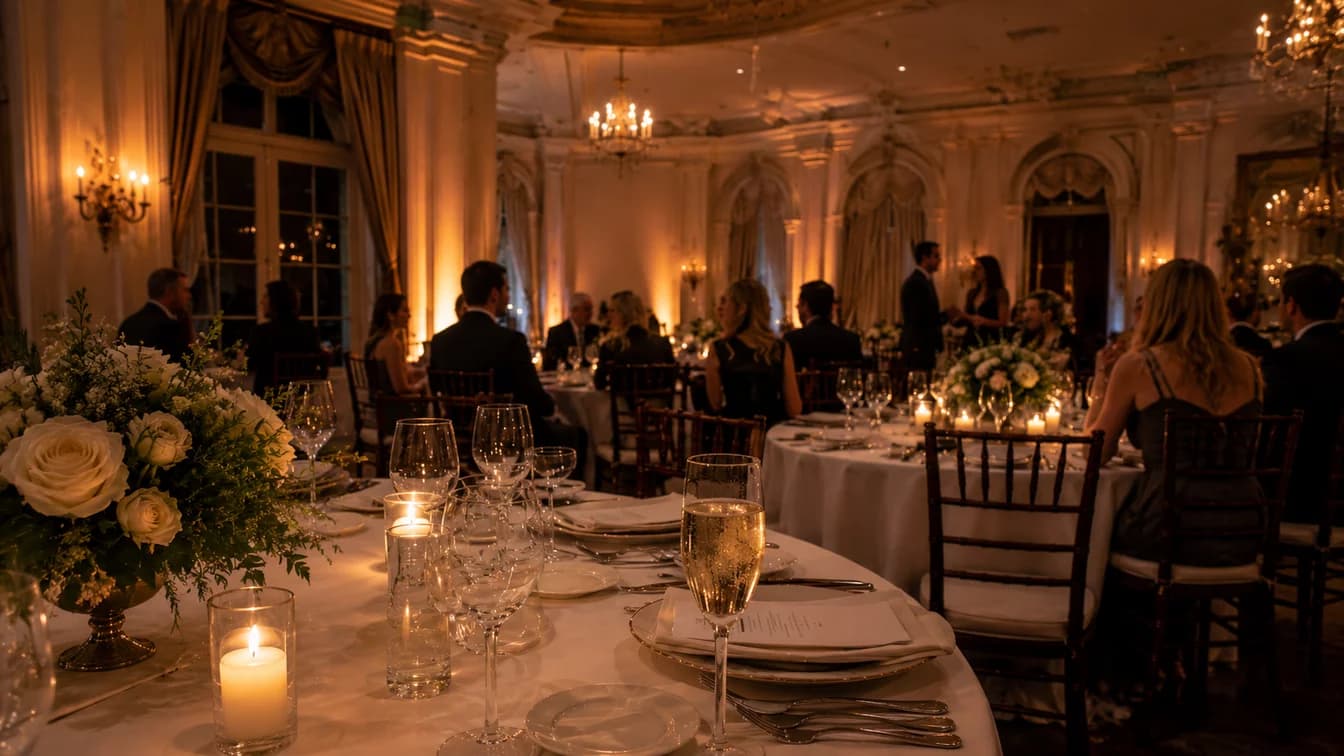
Weddings are designed to dissolve your defenses. The lights soften. The music swells. Someone you love is crying happy tears at the front of the room. A waiter circles with a tray of champagne flutes that catch the light like they were lit by a cinematographer. Everyone you went to high school with is suddenly four drinks in and hugging you.
This is not a neutral environment. This is a high-density cue stack — alcohol, nostalgia, emotion, social pressure, and ritual — engineered over centuries to produce exactly the state you are trying to avoid.
You can still go. You can still have a good night. But you need a plan that survives contact with the open bar.
Why weddings break sober people who are otherwise stable
A normal Tuesday has maybe two or three cues that pull you toward your old behavior. A wedding has thirty. The bartender. The toast. The slow dance. The uncle who only talks to you when he is drunk. The bridesmaid you used to date. The smell of someone else's bourbon. The exhausting math of small talk with people who knew the old version of you.
Each one of those is a trigger. Stacked together, they overwhelm the prefrontal systems you normally rely on. This is the same dynamic that makes evenings the hardest part of early sobriety — your willpower runs down across the day, and the cue density goes up just as your resistance bottoms out.
Andrew Huberman has talked openly on his podcast about how the first wedding and the first work event after he got sober were among the hardest moments of his recovery — not because the cravings were unbearable, but because the social architecture assumes you drink. Refusing a drink reads, in that room, as refusing to participate.
That feeling is real. It is also survivable.
What do you commit to before you arrive?
The single most important decision happens before you put on the suit or the dress. Kate Bee of The Sober School puts it plainly: a maybe almost always becomes a yes. If you walk in with the door open even a crack — I will see how I feel, I will play it by ear, maybe one glass of champagne for the toast — your craving brain will walk through that crack the second the lights dim.
Close the door before you leave the house.
Write down, the night before, exactly what you are committing to. Not as an aspiration. As a contract with yourself. Something like: I am not drinking at this wedding. Not at cocktail hour, not during the toast, not at the after-party, not in the hotel room afterward. If I find myself reaching for a glass, I leave.
Read it once before you get dressed. Put it in your pocket. The version of you that wrote that line is the version you trust. The version of you at the reception, three hours in, with the band playing your wedding song from a relationship that ended badly — that version does not get a vote.
The decision was already made.
How do you handle the drink-in-hand problem?
The first ninety seconds matter more than any other ninety seconds of the night. Walk in, locate the bar, order before anyone offers you anything. Soda water with lime looks identical to a vodka tonic. A non-alcoholic beer in a bottle looks identical to a beer. Ginger ale in a rocks glass with a lime wedge will end every conversation about drinks before it begins.
Keep the glass full. The moment it empties, you are vulnerable — a server will appear, a friend will offer to grab you one, a relative will ask what you are drinking. Refill before you hit empty.
This sounds trivial. It is not. The drink-in-hand tactic does most of the social work for you. Most people are not actually trying to peer-pressure you into drinking; they are trying to make sure you have a drink because that is what hosts and friends do at weddings. Give them the visual confirmation and they move on.
If someone does ask why you are not drinking, you have several scripts:
- The driving line. "I am driving tonight." Closes the conversation in five seconds. - The health line. "I am off alcohol right now — feeling better without it." Honest, vague, not your medical record. - The boring truth. "I do not drink anymore." If someone pushes past this, they are revealing something about themselves, not extracting information from you.
You do not owe anyone a recovery story at a wedding reception. How you talk to friends about quitting can be a longer conversation on a different day.
One line. Move on. Refill the glass.
Who is your sober ally?
Do not go alone if you can possibly avoid it. Keith Humphreys, in his conversation with Huberman, describes how recovery often comes down to practical questions: how do I manage a social interaction without alcohol, what do I do for fun, how do I hang out with my friend who loves to drink. The answers are easier when another human is in the room with you, on your side.
A sober ally can be a partner, a friend in recovery, a family member who knows your situation, or — at minimum — a person on your phone who is awake during the reception and has agreed to take your call.
Tell them the plan in advance. If I text you the word "anchor," call me back within two minutes and tell me you need help with something. Pre-arranged extraction is one of the most underrated tools in early recovery. It works because you do not have to invent an excuse in a state where invention is hard.
If no one local is available, the SAMHSA helpline at 1-800-662-4357 is staffed twenty-four hours a day, free and confidential. Save the number in your phone before you leave for the venue.
You should not have to white-knuckle through a reception in silence.
What do you do when the craving hits anyway?
It will hit. Probably during the toasts. Probably when a song from a particular era plays. Probably when someone you have not seen in years says you used to be the life of the party, what happened to you.
Leave the room. Not dramatically — just step out. Bathroom, parking lot, hallway, hotel lobby, anywhere with fewer cues per square foot. Cravings are state-dependent. Change the state and the craving loses most of its grip within minutes.
While you are out:
- Drink water. Cold water on the inside of your wrists if you can. - Text your ally. Even just the word "here." - Move your body. Walk the block. Take stairs. Anything to disrupt the freeze. - Name what you are actually missing. Often it is not the alcohol — it is the belonging, the loosening, the permission to feel something. Naming the real need takes pressure off the substitute.
If after fifteen minutes you still feel unsafe, leave the wedding. You are not obligated to stay through the cake. The couple getting married will be fine. A relapse will not be fine. Weddings end. Recovery is the thing you are protecting.
The exit is not a failure. The exit is the plan working.
What about the after-party and the hotel minibar?
The danger window does not close when the reception ends. The after-party at the hotel bar, the late-night room with the bridal party and a bottle of tequila, the minibar in your own hotel room at 2 a.m. when the adrenaline crashes and you are alone — these are often the hardest moments of the entire weekend.
Plan for them in advance. Decline the after-party before anyone invites you. Ask the front desk to empty the minibar from your room — they will do it without asking why. Have a podcast or a book or a movie cued up for the post-event crash, because the comedown after social intensity is its own kind of trigger.
If you are traveling for the wedding, the disruption of routine compounds the risk. Your morning structure is gone, your sleep is broken, your people are not there. This is why the first weeks of sobriety feel so flat — and weddings amplify that flatness by surrounding you with manufactured highs you cannot access.
Get home. Get to your bed. The dangerous part is the hours after, not the event itself.
You are allowed to leave
The most useful thing anyone told me before my first sober wedding: you are allowed to leave whenever you want. Not at a polite hour. Not after the cake. Whenever you want.
You did not sign a contract when you RSVP'd. The couple will not remember whether you stayed for the last dance — they will remember that you showed up, that you were happy for them, that you were present for the moments that mattered.
Show up. Be warm. Toast with water. Eat the food. Dance one song. Hug the people you love. And then, when you feel the floor start to tilt, leave.
A wedding you survived sober is a wedding you will remember clearly for the rest of your life. That is rarer than you think.
Sources
- Bee K. "How To Stay Sober At A Wedding (And Still Have Fun)." The Sober School. https://thesoberschool.com/how-to-stay-sober-at-a-wedding/ - Huberman A, Humphreys K. Interview on social skills in early recovery. Huberman Lab Podcast. - Huberman A, Soave R. Interview on alcohol and social pressure in recovery. Huberman Lab Podcast. - Substance Abuse and Mental Health Services Administration (SAMHSA). National Helpline, 1-800-662-4357.
The Craving Toolkit includes a printable Event Survival Plan worksheet — pre-event commitments, scripts, exit triggers, and a sober-ally protocol designed for exactly this kind of high-cue night.
Frequently Asked Questions
- Should I skip a wedding if I am newly sober?
- If you are in the first weeks of recovery and the wedding is alcohol-heavy with no sober ally available, skipping is a reasonable choice — not a moral failure. Your sobriety is the foundation everything else rests on. Send a warm note, a gift, and protect the foundation.
- What do I order at the open bar?
- Walk straight to the bar before anyone offers you anything and order soda water with lime, a tonic with bitters, or a non-alcoholic beer. Holding a glass closes the social loop — most people stop noticing once you already have a drink. Keep it full all night.
- Do I have to tell people why I am not drinking?
- No. A short line like I am driving, I am on medication, or I am taking a break from alcohol is enough. You owe no one your medical history at a reception. If someone pushes past a polite no twice, that is information about them, not a reason to explain yourself.
- How do I handle the toast?
- You can toast with anything in a glass — water, sparkling cider, soda. The ritual is in the raised arm and the eye contact, not the liquid. Plan this in advance so the moment does not catch you reaching for a passing champagne flute on autopilot.
- What if a craving hits hard mid-reception?
- Leave the room. Step into a bathroom, the parking lot, a quiet hallway — anywhere the cue stack thins out. Text your sober ally, call a recovery contact, or dial SAMHSA at 1-800-662-4357. Cravings pass faster than you think when you remove yourself from the stimulus.