Night Sweats Quitting Drinking: What to Expect
Written by Jakub Havelka
Software engineer · 10+ years in recovery · Author of the Craving Toolkit
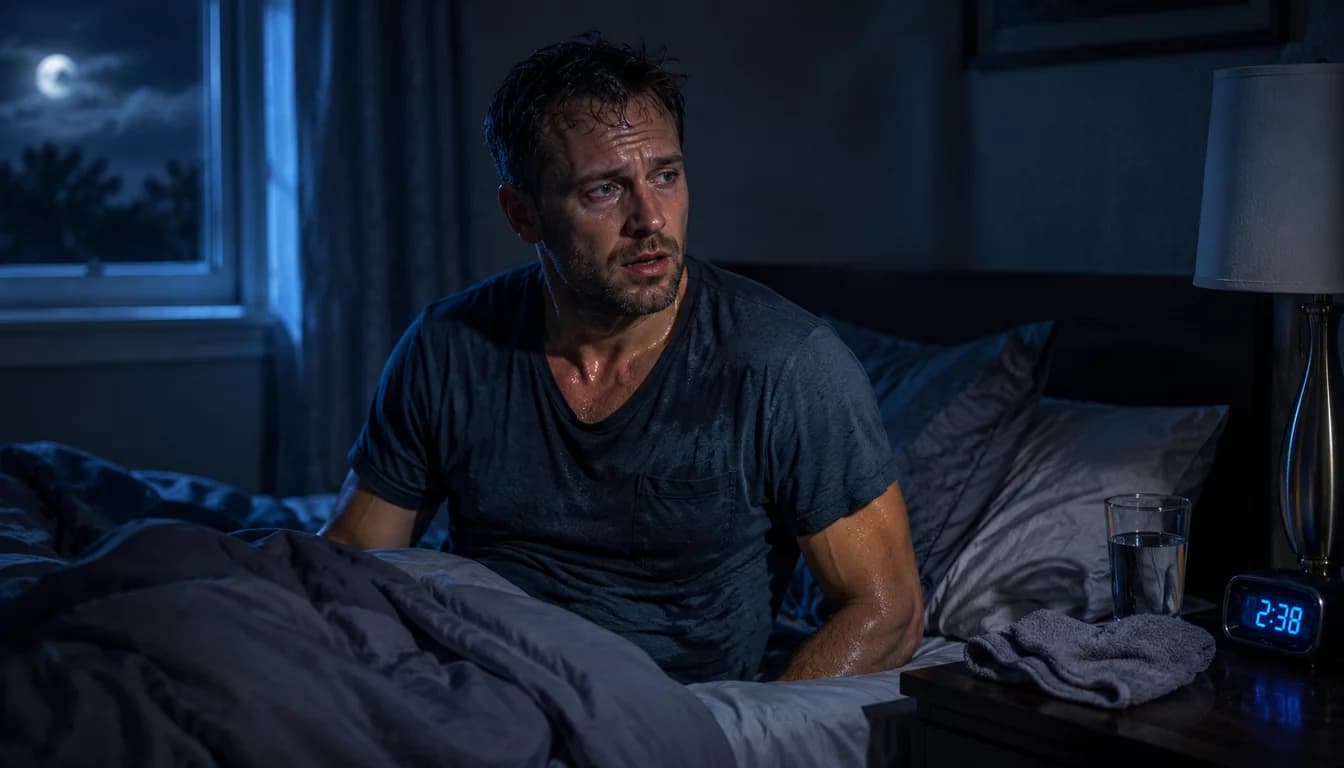
You wake at 3 a.m. with the sheets soaked through. Your chest is pounding. Your pillow smells like fear. You had your last drink yesterday — or the day before — and your body is putting on a show you didn't agree to.
Your body is not broken. What is happening has a shape, a timeline, and a short list of signs that mean a doctor instead of a search engine. Here is all three.
Why does quitting alcohol make you sweat at night?
Alcohol is a depressant. For months or years, it has been dialing your nervous system down — slowing your heart, slackening your muscles, dulling the stress signals your brain pumps out. Your body adapted by turning those same systems up, so that with alcohol on board you landed somewhere near normal.
Take the alcohol away, and the adaptation is still there. Your nervous system is running hot with nothing to push against. Heart rate climbs. Blood vessels open. Body temperature spikes and then crashes. Your sympathetic nervous system — the fight-or-flight branch — fires hard, especially during sleep when the brain stem is doing the driving.
That rebound is the night sweat. It is not your body rejecting health. It is your body doing in raw, mechanical form what alcohol used to do chemically.
Anna Lembke, in Dopamine Nation, is direct about what makes alcohol different from many other substances: physical withdrawal from it can be life-threatening. She warns explicitly against unsupervised "dopamine fasts" or sudden cessation for people with severe alcohol dependence, and recommends medically monitored tapering instead. Sweating is on the gentle end of that spectrum. Seizures and delirium tremens are on the other end.
What does the typical night-sweats timeline look like?
Every body is different, but the broad shape is consistent enough to plan around.
The first day. Sweating, mild tremor, racing pulse, and anxiety often begin within hours of your last drink. Many people first notice it as a clammy, restless evening that turns into a soaked early-morning wake-up.
The first few days. This is usually the worst stretch. Night sweats often peak here, along with insomnia, vivid dreams, nausea, and a baseline of anxiety that feels disproportionate to anything happening in your life. Your nervous system is at maximum overshoot. Your bedsheets will pay the price.
The first week or two. For most people without severe dependence, the heavy sweating eases over this window. You will probably still wake up damp, still have nights where the shirt has to come off at 4 a.m. But the soaked-through, change-the-sheets episodes get rarer.
The first month or two. Lighter night sweats, broken sleep, and temperature swings often persist. This is the territory of post-acute withdrawal — what clinicians call PAWS. Lembke describes seeing patients whose reward systems and autonomic balance take weeks longer than expected to settle, especially after long, heavy use. Younger brains recalibrate faster; older ones take their time.
Months in. Stress-triggered sweating, occasional damp nights, and disrupted sleep can still flicker, particularly during big life events or emotional spikes. These are not signs the recovery is failing. They are aftershocks from a nervous system rewiring on its own clock.
Avoid the temptation to lock yourself into someone else's calendar. The shape is predictable. The exact pace is not.
When do night sweats mean you need a doctor?
If you have been drinking daily and heavily, read this section before anything else on the page.
This is the section to read twice.
Night sweats by themselves, even drenching ones, are usually a normal part of stopping. They become a medical emergency when they come bundled with other symptoms.
Get to an emergency room or call 911 if you have:
- Tremors so strong you cannot hold a cup - Vomiting that will not stop - A racing heart that doesn't settle when you rest - A fever above 101°F (38.3°C) - Confusion, disorientation, or seeing or hearing things that aren't there - Any seizure activity, even brief
Those are signs of severe alcohol withdrawal, including the possibility of delirium tremens, which has a real mortality rate if untreated.
If you drink heavily and daily, have withdrawn before, mix alcohol with benzodiazepines or opioids, or have other significant medical conditions, do not detox at home. Call SAMHSA's free, confidential, 24/7 helpline at 1-800-662-4357 (1-800-662-HELP). They will connect you to local detox and treatment options, including ones that take Medicaid or sliding-scale fees.
A supervised detox is not a failure. It is the difference between a hard week and a hospital admission.
What actually helps the sweating itself?
Once you know you are medically safe, the comfort measures are unglamorous but effective.
Cool the room aggressively. Drop the thermostat. Open a window. Run a fan pointed at the bed. Your internal thermostat is unreliable; lean on the external one.
Layer for shedding. Loose cotton sleepwear, a thin top sheet, and a separate blanket you can kick off without getting tangled. Avoid synthetic fabrics that trap heat.
Pre-place a towel. Put a folded bath towel on top of your fitted sheet where your back and chest go. When you wake soaked, you peel off the towel, not the whole bed. This single trick changed my own first week.
Keep water and electrolytes by the bed. Sweating drains sodium and potassium. A glass of water with a pinch of salt, or an electrolyte packet, helps you avoid the headache-and-nausea cascade.
Skip caffeine after noon. Your sympathetic system is already overcooked. Don't pour more gasoline on it.
Anchor your evenings. Evenings are the hardest hours in early sobriety — both for cravings and for the body memory of when you used to drink. A predictable wind-down (light meal, shower, screen off, low lighting, breathing exercise) tells your nervous system the day is closing without alcohol's help.
Protect sleep above almost everything else. Sleep in recovery is non-negotiable. The sweats sabotage it, but going to bed late or sleeping in chaos makes the next night worse. Same wake time. Same bed. Boring is medicine here.
Is this normal, or is something wrong with you?
You will probably ask this somewhere around night four, lying in a cold puddle of your own sweat at 3 a.m., wondering if your liver is failing or if you are losing your mind.
You are not losing your mind. You are watching a system that adapted to a chemical learn how to run without it. That is supposed to be uncomfortable. The discomfort is the proof that the adaptation existed — and the proof that it can reverse.
A lot of people quietly describe early sobriety as more grief than detox. The body grieves the loss of alcohol the way a relationship grieves, with somatic symptoms that don't map onto any single feeling. The sweats, the shakes, the racing 3 a.m. brain — those are part of the same letting-go.
Mark the calendar. Track the nights. The drenched ones will get further apart. The damp ones will replace them. Then the cool ones. Then sleep that feels like sleep again.
The first dry shirt in the morning is a milestone worth noticing.
Sources
- Lembke A. Dopamine Nation: Finding Balance in the Age of Indulgence. Dutton, 2021. - Substance Abuse and Mental Health Services Administration (SAMHSA). National Helpline: 1-800-662-4357. https://www.samhsa.gov/find-help/national-helpline
If you are quitting heavy or daily drinking, please use medical support. The Craving Toolkit is built for the cravings, urges, and habits side of recovery — not as a substitute for supervised detox. Call SAMHSA at 1-800-662-4357 if you are not sure what you need.
Frequently Asked Questions
- How long do night sweats last after quitting drinking?
- For most people, the worst night sweats happen in the first few days after the last drink and ease over the first week or two. Lighter sweats, vivid dreams, and disrupted sleep can linger for weeks or months as your nervous system recalibrates. Heavier, longer drinking histories generally mean longer timelines.
- Why am I sweating so much at night without alcohol?
- Alcohol suppresses your nervous system. When you stop, that system rebounds — heart rate, body temperature, and stress hormones swing high, especially at night. Your body is doing in real time what alcohol used to do chemically. The sweating is uncomfortable, but it is usually a sign of recalibration, not damage.
- When are alcohol withdrawal night sweats dangerous?
- Night sweats alone are common. They become a medical emergency when paired with shaking that won't stop, vomiting, a racing heart, confusion, hallucinations, seizures, or a high fever. Those are signs of severe withdrawal, including possible delirium tremens. Call 911 or go to an ER. Do not detox alone if you drink heavily.
- What helps night sweats during alcohol detox?
- Keep your room cool, sleep on a towel, hydrate steadily, eat regular meals, and skip caffeine after noon. Loose cotton sleepwear and a fan help more than people expect. If your drinking has been heavy or daily, talk to a doctor before quitting — a short medication-assisted detox can blunt the worst of it.
- Can night sweats from alcohol come back months later?
- Yes. Post-acute withdrawal syndrome (PAWS) can produce flashes of sweating, anxiety, and broken sleep weeks or months into sobriety, often triggered by stress. The episodes are usually milder than early detox. They are not relapse — they are nervous system aftershocks. They fade as sleep architecture rebuilds.
- Should I go to detox or quit at home?
- If you drink heavily every day, have had withdrawal symptoms before, have other health conditions, or are using benzodiazepines or opioids alongside alcohol, do not quit cold turkey at home. Alcohol withdrawal can be fatal. Call SAMHSA's free 24/7 helpline at 1-800-662-4357 to find supervised detox near you.