Craving Food When Not Hungry: Why It Happens
Written by Jakub Havelka
Software engineer · 10+ years in recovery · Author of the Craving Toolkit
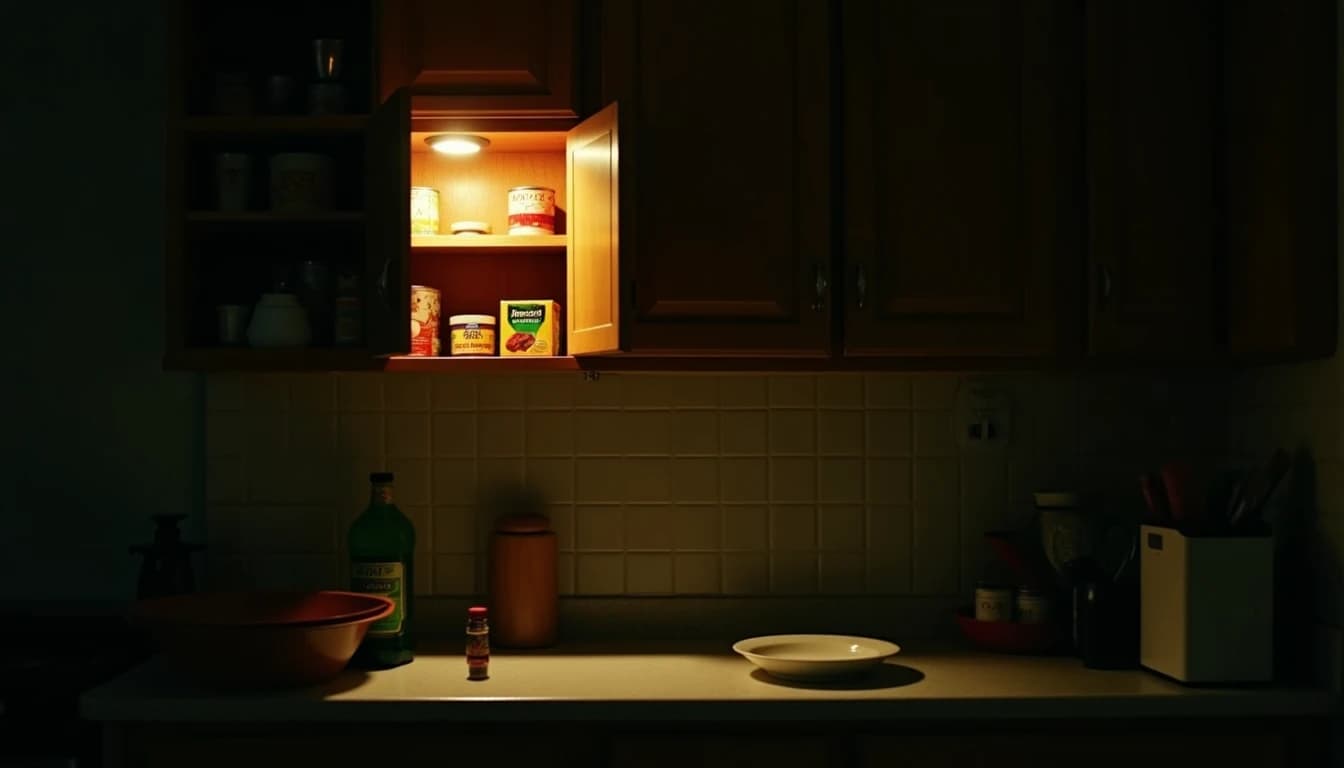
You finished dinner twenty minutes ago. The plate is clear, your stomach is full, and you are not hungry by any honest definition of the word. But you are standing in front of the cupboard anyway, scanning for something sweet. Or salty. Or both. The pull is specific — it does not want broccoli, it wants the chocolate behind the cereal box — and it is louder than it has any right to be.
This is not hunger. Your body has the fuel it needs. Something else is asking.
That something else is the difference between recognizing cravings as biological emergencies and recognizing them as what they actually are: a learned signal from a brain system that does not care whether your stomach is empty.
Why does my brain want food when my body doesn't need it?
Hunger and craving are not the same circuit. Hunger is a slow, body-wide signal driven by hormones like ghrelin and leptin, accepting almost any food, building gradually, and going away when you eat. Craving is fast, specific, often emotional, and frequently arrives when you are already full.
Researchers at UCLA identified a population of food-seeking neurons that drive the search for high-calorie foods independently of hunger signals. These neurons fire when a learned cue appears — a smell, a time of day, a feeling — not when your body needs energy. The result: a pull toward food that has nothing to do with whether you ate.
This system was useful once. In an environment where calories were scarce and unpredictable, a brain that pushed you to eat the rare sugary or fatty food whenever it appeared was a brain that survived. The same wiring, dropped into a kitchen full of ultra-processed snacks, becomes a liability — a trait explored more deeply in ultra-processed food addiction.
The craving is doing exactly what it evolved to do. The environment is the part that changed.
Is this a craving or am I actually hungry?
The fastest test I learned: would you eat an apple right now? Or a plain piece of chicken?
If yes, your body wants fuel. That is hunger.
If the answer is "no, I want the cookie specifically," your brain wants reward. That is craving.
Real hunger builds slowly and accepts almost anything — a plate of plain chicken, a bowl of plain rice, last night's leftovers. It lives in the body: stomach emptiness, low energy, a faint lightheadedness that grows over hours. It is patient. You can wait twenty minutes without distress, and once you eat enough of almost anything, it goes away.
Craving arrives fast and demands the specific thing — sweet, salty, crunchy, the particular item behind the cereal box. It lives in the head: mental loops, mouth-watering, intrusive thoughts, a sense of urgency that has no interest in an apple. It often follows a cue you barely noticed, and it tends to persist even after you eat other things, because the food you ate was not what it was actually after.
If you can tell the difference in real time, you have already won most of the fight. A lot of overeating happens because we treat every food signal as if it were hunger. It isn't.
What is actually triggering the craving?
In The Power of Habit, Charles Duhigg describes the cue-routine-reward loop that underlies almost all habitual behavior, with craving acting as the glue that holds the loop together. For food, the cues fall into a few predictable categories.
Time. 3 p.m. at the desk. 9 p.m. on the couch. The brain has learned that this time means food, and it fires the craving on schedule, regardless of what you ate at lunch. This is the same mechanism behind evening cravings in sobriety — the clock itself becomes the trigger.
Emotional state. Stress, boredom, loneliness, frustration, restlessness. The reward system learned long ago that food shifts these states quickly, and now the state itself summons the food. You are not eating because you are hungry. You are eating because you are uncomfortable and your brain has filed "snack" as the answer.
Place and situation. The kitchen after work. The car. The couch in front of a screen. The cinema. These environments have been paired with eating thousands of times. The pairing is the cue.
Preceding action. Finishing a meal, sitting down, opening a laptop, finishing a task. The brain runs sequences. One step often summons the next.
People. Eating with the friend you always eat with. Walking past the colleague who keeps candy on her desk.
The craving is not random. It is a response to a specific cue your brain has learned to associate with eating. The cue fires. The craving follows. The behavior happens — and your prefrontal cortex shows up afterward to file the rationalization.
What is the craving really asking for?
Here is the part most articles about food cravings miss.
In the Craving Toolkit, drawing on Marc Lewis's distinction between wanting and liking, the craving is rarely a request for the food itself. It is a request for what the food provides — and the food is just the closest available delivery system.
A craving for ice cream at 10 p.m. may not be saying I want ice cream. It may be saying:
- I want the day to be over - I want the agitation to stop - I want a reward after a hard shift - I want to feel something other than this - I want a small ritual that signals I am off-duty - I want quiet
The food works because it delivers, briefly, on one of these needs. The dopamine hit. The sensory reset. The five minutes of attention narrowed to taste. The transition from work-self to rest-self.
If you can name what the craving is actually asking for, you can sometimes give it directly — and the food request quiets down. A walk. A bath. A call to a friend. A real ten-minute break with no screen. Lying down with your eyes closed.
You are not always going to want what you need. But you can often recognize, in retrospect, what would have actually worked.
How do I respond when the craving hits?
Three moves, in order.
Pause and name it. Out loud if you can. "This is a craving. I am not hungry. My brain is asking for something." Naming the experience activates the prefrontal cortex and gives you a fraction of a second of distance from the urge. That fraction is everything.
Run the experiment. Duhigg's diagnostic suggests substituting a different reward and watching what happens. Drink a glass of water and wait ten minutes. Go outside. Brush your teeth. Stretch. If the craving fades, the food was not the actual answer. You can use this technique like urge surfing — observing the wave without acting on it, watching it crest and fall.
Decide on purpose, not on autopilot. If you decide, after the pause, to eat the thing — eat it. Slowly. Sitting down. Without a screen. The point is not to white-knuckle through every craving. The point is to break the automatic loop where cue fires and behavior happens with no decision in between.
Sometimes you will eat the cookie. The cookie is fine. The loop is the problem.
When food cravings start looking like addiction
Most food cravings are ordinary. Some aren't. When the cravings are constant, when they override decisions you have repeatedly made, when they continue despite real consequences to health, sleep, or self-respect, when shame and secrecy show up around eating — you are looking at something that behaves more like an addictive pattern than a habit. The mechanisms overlap. The tools overlap too. Many people in recovery from alcohol notice this overlap directly, which is why sugar cravings after quitting alcohol are so common.
If that's where you are, the craving deserves the same respect you would give any other compulsive pull. Structure. Self-binding. Honesty. Help if you need it.
You are not weak for not being able to think your way out of it. You are dealing with a system that was designed not to be reasoned with.
Sources
- Duhigg C. The Power of Habit: Why We Do What We Do in Life and Business. Random House, 2012. - Lewis M. The Biology of Desire. PublicAffairs, 2015. - Spiegelman E. The Rewired Life. Hatherleigh Press, 2018. - Polk SE, et al. "The Psychology of Food Cravings: the Role of Food Deprivation." Curr Nutr Rep. 2020. PMC7399671 - UCLA Newsroom. "Food-seeking neurons crave high-calorie foods absent hunger." 2024.
The Craving Toolkit includes a Craving Log worksheet that helps you map cues, name the real reward, and break the cue-to-eating loop one observation at a time.
Frequently Asked Questions
- How do I tell the difference between a craving and real hunger?
- Real hunger builds slowly, accepts most foods, and lives in your stomach. A craving comes on fast, demands a specific food (usually sweet, salty, or fatty), and lives in your head. If you'd turn down an apple but say yes to ice cream, that's craving — not hunger. The body wants fuel; the brain wants reward.
- Why do I crave food right after a meal?
- Because hunger and craving run on different systems. UCLA researchers identified food-seeking neurons that fire independently of fullness, driving you toward high-calorie foods even when your stomach is full. The reward circuit doesn't care that you ate. It's responding to a cue — emotional, environmental, or habitual — not to an energy deficit.
- Are food cravings a form of addiction?
- Not always, but they share the same machinery. The cue-craving-routine-reward loop Charles Duhigg describes works the same way for cookies as it does for cigarettes. When food cravings feel compulsive, override your decisions, and continue despite consequences, they're behaving like an addictive pattern — and respond to the same recovery tools.
- Does eating more protein or drinking water actually stop cravings?
- Sometimes — but only when the craving is partly biological. Steady meals, hydration, and sleep reduce the body's contribution to the urge. They don't touch the emotional or habit-driven layers. If your craving hits at the same time every evening regardless of what you ate, the trigger isn't nutritional. It's neurological.
- Should I just give in to small cravings to avoid bingeing later?
- It depends on the food and the pattern. Research reviewed in PMC suggests short-term restriction of one specific food can intensify cravings for it, while sustained dietary change tends to reduce them over time. The risk isn't a single cookie. It's that compliance reinforces the loop and trains your brain that the cue must be obeyed.