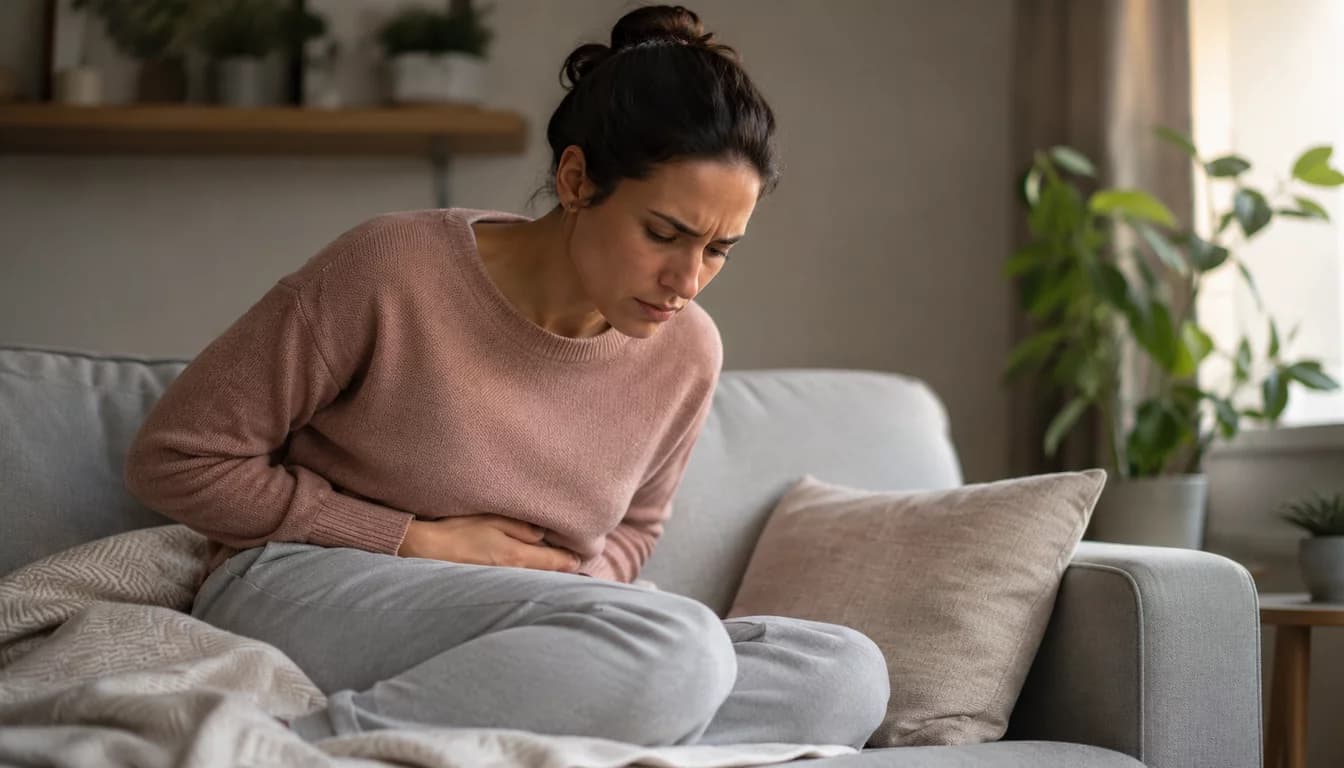
Stomach Ache After Quitting Drinking: Why It Hurts
Written by Jakub Havelka
Software engineer · 10+ years in recovery · Author of the Craving Toolkit
The morning after your last drink, your stomach turns against you. Maybe it's a dull burn under the breastbone. Maybe it's sharp cramping. Maybe it's nausea that comes in waves whenever you try to drink water. You stopped doing the thing that was hurting you, and somehow you feel worse.
This is one of the most disorienting parts of early sobriety. You expected to feel better. Instead, your gut is on fire.
Why your stomach hurts after you stop drinking
Alcohol is a direct irritant to the stomach lining. Every drink you took for years inflamed the mucosa, increased acid secretion, and disrupted the normal balance of bacteria in your gut. While you were drinking, the alcohol itself partly masked the damage. It's a crude anesthetic. Now that the anesthetic is gone, the inflammation underneath is exposed.
Three things are usually happening at once.
The lining is inflamed. Chronic drinkers often develop gastritis: irritation, sometimes erosions, of the stomach wall. NIAAA publications and standard gastroenterology references describe this as one of the most common GI consequences of heavy alcohol use. When you stop drinking, the lining begins to heal, but healing is not painless. Acid still hits raw tissue.
Your acid regulation is off. Long-term drinking changes how your stomach produces and clears acid. In the early days after quitting, many people experience a rebound effect, where acid production stays elevated even though there's no alcohol to buffer or distract from it.
Your nervous system is still resetting. Alcohol withdrawal isn't just shaky hands. It's the entire autonomic nervous system in overdrive. That includes the enteric nervous system in your gut, which is why anxiety, sweating, and stomach cramps tend to arrive together. The gut and the brain share more nerve traffic than most people realize, and a hyperactive brain produces a hyperactive gut.
If your drinking was heavy or daily for years, you may also be dealing with lingering effects of fatty liver, pancreatic inflammation, or impaired bile flow. Any of these can show up as upper abdominal pain in the first weeks of sobriety.
Your stomach is not betraying you. It's healing in public.
How long does stomach pain last after quitting alcohol?
For mild cases, the worst of it usually settles within the first one to two weeks. Acute withdrawal-related GI symptoms tend to track the broader withdrawal timeline: peaking in the first few days, easing meaningfully by the end of the first week, and tapering further over the weeks that follow.
If you developed real gastritis from long-term drinking, full healing of the stomach lining takes longer. Weeks, sometimes a few months, depending on severity and whether you're still introducing irritants like NSAIDs, coffee on an empty stomach, or smoking.
Pancreatic and liver healing operate on slower timelines still. The pain from those tissues feels different. It tends to radiate, it tends to be deeper, and it doesn't track the meal you just ate the way garden-variety gastritis does.
If you've been through detox before and each round has felt worse, read about the kindling effect in alcohol withdrawal. Repeated withdrawals can amplify symptoms, including GI ones, with each attempt.
What helps, and what makes it worse
A few things genuinely move the needle. None of them are dramatic.
Eat small, bland, frequent meals. An empty stomach pumping acid into raw lining is misery. White rice, oatmeal, bananas, plain toast, eggs, chicken broth. Boring food is medicine right now.
Hydrate, but slowly. Sipping water or an electrolyte drink throughout the day works better than chugging a glass when you remember. Alcohol withdrawal often comes with night sweats and disrupted sleep, both of which dehydrate you further.
Avoid the obvious triggers. Coffee, citrus juice, spicy food, large fatty meals, carbonated drinks, and tobacco all aggravate inflamed stomach tissue. Cut them for now. Reintroduce later when you're not actively healing.
Skip the ibuprofen. The ibuprofen mistake is the one I wish someone had flagged in my own first week. It sounds too minor to matter until it isn't. NSAIDs (ibuprofen, naproxen, aspirin) damage the same stomach lining that's already inflamed, and they can convert mild gastritis into an actively bleeding ulcer. If you need a pain reliever, acetaminophen is usually the safer choice, but talk to a doctor first if your liver is already stressed.
Ask about acid suppression. A short course of an H2 blocker or proton pump inhibitor, prescribed or supervised by a clinician, often calms early-sobriety gastritis quickly. This is a clinician's call, not a forever solution.
You're not weak for needing real food, real rest, and real medical input. You're recovering from a physical injury.
When stomach pain after quitting drinking is an emergency
Most early-sobriety stomach pain is uncomfortable but not dangerous. Some of it is. Learn the difference.
Get evaluated urgently, today, if any of these apply:
- Vomiting blood, or vomit that looks like coffee grounds - Black, tarry, or bloody stools - Severe pain that radiates to your back, especially with nausea and vomiting (this can be acute pancreatitis) - Yellowing of the skin or eyes (jaundice) - High fever with abdominal pain - Pain so severe you can't stand up straight, or pain that doesn't ease at all over hours - Confusion, hallucinations, seizures, or severe tremor alongside the GI symptoms (this is medical withdrawal, not just an upset stomach)
For severe alcohol withdrawal, abdominal pain is sometimes a sidebar to a much more dangerous picture. Delirium tremens and withdrawal seizures can kill people. If you've been a heavy daily drinker for years and you're trying to stop on your own, do not assume the worst symptom is the stomach. The American Society of Addiction Medicine guidelines recommend medically supervised detox for anyone with a history of severe withdrawal, seizures, or significant medical comorbidity.
If you're not sure whether your situation calls for medical detox, SAMHSA's National Helpline is free and confidential, 24/7: 1-800-662-4357. They will route you to local options, including medical detox programs that can manage withdrawal safely.
When in doubt, call.
What recovery actually looks like from your gut's point of view
In the first week, you'll likely feel worse before you feel better. Sleep is broken, restless legs and night sweats interrupt rest, and your stomach uses every quiet moment to remind you it exists.
By the second and third week, most people notice the burn easing, appetite returning, and food starting to taste like food again. Appetite changes in early sobriety follow their own pattern, with hunger sometimes spiking unpredictably as the gut wakes up.
By the second month, for most people who didn't drink heavily for decades, the stomach is no longer a daily presence in their thinking. It just works. Which is the whole point.
Healing is unglamorous, slow, and worth it.
Sources
- National Institute on Alcohol Abuse and Alcoholism (NIAAA). Alcohol's Effects on the Body and related publications on gastrointestinal consequences of alcohol use. niaaa.nih.gov - American Society of Addiction Medicine (ASAM). The ASAM Clinical Practice Guideline on Alcohol Withdrawal Management. - Bode C, Bode JC. "Alcohol's role in gastrointestinal tract disorders." Alcohol Health & Research World, NIAAA. - SAMHSA National Helpline, 1-800-662-4357 (free, confidential, 24/7 treatment referral and information). samhsa.gov
If the physical symptoms of quitting are scaring you, talk to a doctor before deciding to white-knuckle it alone. Medically supervised detox exists precisely so you don't have to.
Frequently Asked Questions
- Why does my stomach hurt the morning after I stop drinking?
- Alcohol is a direct irritant to the stomach lining, and stopping suddenly exposes the inflammation you had been masking. Acid production stays elevated, the gut microbiome is disrupted, and your nervous system is firing on overdrive. The pain is real and physical, not a sign that quitting was a mistake.
- How long does stomach pain last after quitting alcohol?
- For most people, the worst of withdrawal-related stomach pain eases within the first one to two weeks. Real gastritis from years of drinking can take longer, sometimes a few months, to fully heal. Pancreatic or liver pain operates on slower timelines and feels different, deeper and more radiating.
- Can I take ibuprofen for stomach pain after quitting drinking?
- No, this is the most common over-the-counter mistake. NSAIDs like ibuprofen, naproxen, and aspirin damage the same stomach lining that's already inflamed and can turn mild gastritis into a bleeding ulcer. Acetaminophen is usually safer, but ask a doctor first if your liver has been stressed by heavy drinking.
- What should I eat when my stomach hurts after quitting?
- Small, bland, frequent meals work better than three big ones. White rice, oatmeal, bananas, plain toast, eggs, chicken broth. Avoid coffee, citrus, spicy food, large fatty meals, carbonation, and tobacco. Hydrate steadily throughout the day instead of chugging water when you remember. Boring food is medicine right now.
- When is stomach pain after quitting drinking a medical emergency?
- Get help today if you're vomiting blood or coffee-ground material, passing black or bloody stools, running a fever with abdominal pain, turning yellow, or feeling pain that radiates sharply to your back. Severe withdrawal symptoms like seizures, hallucinations, or confusion need emergency care regardless of how your stomach feels.