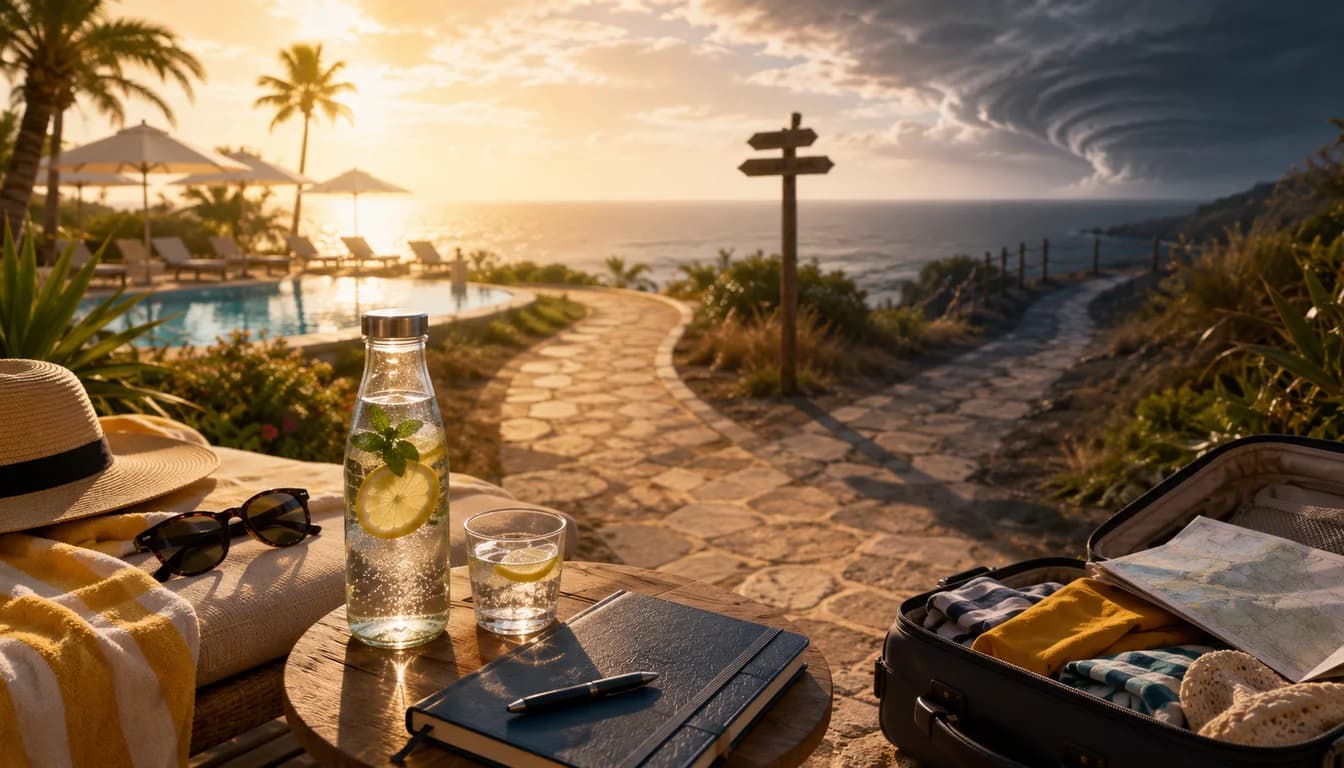
Summer Cravings and Vacation Relapse Risk: A Survival Guide
Written by Jakub Havelka
Software engineer · 10+ years in recovery · Author of the Craving Toolkit
The cooler is open at 11 a.m. Someone hands you a beer before you have even put down your bag. The pool is loud, the music is good, the sun is doing that specific thing it does in July where the day feels endless and unaccountable. Your sober Tuesday self, the one with the morning routine and the 9 p.m. bedtime, feels very far away.
This is where summer recovery actually happens. Not in the gym, not in the meeting, not in the journal. In the small gap between someone holding out a drink and your hand deciding whether to take it.
Vacation and summer are statistically and clinically high-risk seasons. Treatment providers see the same pattern every year: relapses cluster around long weekends, family trips, festivals, and the unstructured stretches between them. The reason is not weak willpower. It is that the scaffolding holding your recovery together gets quietly disassembled by the calendar.
Why does summer hit recovery so hard?
Recovery, especially in the first year, runs on structure. Work schedules, gym times, evening routines, weekly meetings, predictable meals. These are not minor lifestyle details. They are the rails your sober brain runs on while it rebuilds. Charles Duhigg, in The Power of Habit, describes how a stable cue is what tells the brain to deploy a stored routine. Take away the cue and the routine wobbles.
Summer takes away cues by the dozen. You are not at your desk at 9. You are not at the gym at 6. You are not in your kitchen at 7. You are in a hotel, a rental, a campsite, an in-law's spare bedroom. The cues that triggered your healthy routines are gone, and the cues that triggered your old drinking routines (warm weather, pool, music, group of friends, "I'm on vacation") are everywhere.
On top of that, alcohol is not just available on summer vacation. It is the default. The airport bar at 10 a.m., the beach cart, the all-inclusive wristband, the hotel minibar, the welcome cocktail at check-in. Mayflower Recovery and other treatment providers point out that travel infrastructure normalizes drinking at times of day that would feel weird at home. Your brain notices.
And then there is the cultural script: you deserve this, you earned this, this is what vacation is for. That voice is not yours. That is the addictive voice wearing a sun hat.
You are not weak in July. You are unsupported.
What are the specific summer triggers to watch for?
Most relapse-prevention writing lumps "summer triggers" into a single category. That is not useful. They are several different mechanisms and they need different responses.
Disrupted routine. Your evenings used to be predictable. Now they are open. Boredom and free time are among the most reliable craving triggers documented in the recovery literature. If your old drinking happened between 6 and 10 p.m., those four hours on vacation are not empty. They are loaded.
Alcohol-saturated social events. Weddings, barbecues, festivals, reunions. The expectation is not just that alcohol is present. It is that everyone is participating. The pressure is rarely overt. It is the slow normalizing presence of the same behavior repeated by everyone around you for hours.
Sleep disruption. Different bed, time zones, late nights, early flights. Sleep loss reliably raises craving intensity and weakens impulse control. Anna Lembke and other addiction researchers emphasize that your prefrontal cortex needs sleep to keep doing its job of saying no.
Nostalgia and warm-weather memory. If your drinking history includes summer beaches, summer concerts, college summers, festival summers, the season itself is a cue. The smell of sunscreen, charcoal, chlorine. Your brain has those linked to specific routines. The cue fires before you consciously notice.
The "vacation self" identity. On vacation you stop being the responsible person you are at home. You become someone looser. For a person in recovery, that identity slip can be dangerous, because the responsible self is the one running your sobriety. Marc Lewis writes about how identity is built from repetition; vacation breaks the repetition.
Loneliness in a crowd. Family trips, solo travel, weddings where you know few people. Isolation amid social noise is a quieter trigger, but a strong one. This connects to the same pattern that makes evenings the hardest part of early sober life.
Name yours before you go. Cravings you can name are weaker than cravings that ambush you.
What does a real pre-trip recovery plan look like?
You do not need a 40-page binder. You need a written page that your calm self prepared for your triggered self. That page should answer six questions.
What am I drinking instead? Decide now, in writing. Sparkling water with lime. Virgin mojito. Iced coffee. Diet soda. You order it first, you order it confidently, you do not let a server put a cocktail menu in your hand. Hesitation invites the craving in.
Who knows I am sober on this trip? At least one person traveling with you. If you are alone, one person at home who you will text every evening. Mayflower Recovery and Daybreak Treatment Solutions both stress this point: silent sobriety on vacation is the highest-risk version. Tell someone. The act of telling builds a small wall of accountability.
Where are the meetings? Pull them up before you fly. AA, NA, SMART Recovery, online options. Save two or three to your phone. You may not attend any of them. But the safety net is most useful when it is in place before you need it.
What are my high-risk windows? Be specific. The flight. The hotel arrival. The first dinner. The wedding reception between 9 and 11 p.m. The afternoon at the pool. Mark them on your phone calendar. When the time comes, you will already know what you are in.
What is my exit strategy? Your own room key. Your own transportation option (Uber app loaded, car rental, walking route). A stop-time for the evening. You should be able to leave a situation without negotiation, drama, or asking permission.
What do I do if a craving hits hard? Write the script in advance. For example: leave the room, walk for ten minutes, call your accountability person, drink a full glass of water, wait fifteen minutes before any decision. This is the same logic behind urge surfing. The wave is not stopped by willpower; it is outlasted by structure.
If you have never traveled sober before, the experience of a first sober vacation deserves its own pre-trip read. The first one is genuinely harder than the ones that follow.
What if the craving hits anyway?
It will. Plan accordingly.
A craving on vacation feels enormous because all your usual fallbacks are missing. No home, no gym, no familiar walk, no usual routine to slip into. The size of the craving is partly the size of the missing context, not the size of an actual emergency. Your nervous system is telling you this is a crisis. It is not. It is a wave in an unfamiliar location.
Move your body. Leave the immediate environment, even briefly. Walk to the beach, the lobby, the parking lot, the bathroom. Physical movement and a change of scene break the automatic loop that the cue has started. If you can do something demanding (a fast walk, a swim, push-ups in your hotel room), even better. A strong counter-action builds a different association with the craving, the way I learned to do in rehab and described in surviving the first ten minutes.
Call or text someone. Sponsor, friend, partner, the SAMHSA National Helpline at 1-800-662-4357 (free, confidential, 24/7). The act of speaking the craving out loud, even by text, drops its intensity. Cravings hate witnesses.
Drink water and eat something. Dehydration and low blood sugar feel a lot like cravings, and summer heat makes both worse. Sarasota Addiction Specialists puts hydration near the top of their summer recovery list for a reason.
Wait fifteen minutes before deciding anything. The peak of a craving wave is short. What feels permanent at minute three is usually gone by minute twenty. You are not deciding about your whole life. You are deciding about the next fifteen minutes.
And if you do slip, the trip is not over and your recovery is not over. A slip is data, not a verdict. The most dangerous moment is not the first drink; it is the shame spiral after it that tells you the whole vacation is now a write-off. It is not. The next hour is still yours.
Sources
- Duhigg C. The Power of Habit: Why We Do What We Do in Life and Business. Random House, 2012. - Lembke A. Dopamine Nation: Finding Balance in the Age of Indulgence. Dutton, 2021. - Lewis M. The Biology of Desire: Why Addiction Is Not a Disease. PublicAffairs, 2015. - SAMHSA National Helpline, 1-800-662-4357. Substance Abuse and Mental Health Services Administration.
The Craving Toolkit includes a printable Travel & Vacation Plan worksheet covering pre-trip preparation, high-risk windows, exit strategy, and emergency contacts. Fill it out before you pack.
Frequently Asked Questions
- Why does summer increase relapse risk?
- Three things shift at once: your daily routine loosens, social events almost always involve alcohol, and the cultural script tells you to relax and indulge. Each one weakens the structure your brain has been leaning on. Cravings rush into the open space that used to be filled with work, gym, and predictable evenings.
- Is it safe to go on vacation in early recovery?
- It depends on your honesty, not your sobriety length. If you can name your high-risk moments in advance, pre-commit to a structure, travel with someone who knows you are sober, and access a meeting or sponsor by phone, vacation is workable. If you are planning the trip around drinking opportunities, postpone.
- What should I do if I get a strong craving on vacation?
- Leave the situation physically, even briefly. Walk to your room, the beach, the parking lot. Text your accountability person. Drink water. Wait fifteen minutes. Cravings on vacation feel huge because you have no fallback routine, but they still pass. The wave does not last because you are in Cancun.
- How do I handle a beach resort where alcohol is everywhere?
- Decide before you arrive what you will drink instead: sparkling water with lime, virgin mojito, iced coffee. Order it first, fast, with confidence, so a server does not put a cocktail menu in your hand. Tell at least one travel companion that you are not drinking, so the script is set.
- What if everyone I'm traveling with is drinking?
- You do not owe anyone an explanation, but you do need a private exit strategy. Have your own room key, your own transportation option, and a stop-time for the evening. The danger is not their drinking. It is the moment you tell yourself one drink will let you keep up with the group.
- Should I find AA or NA meetings before I travel?
- Yes, and do it before you leave home. The AA and NA websites have meeting locators by city, including online options. Save two or three nearby meetings to your phone. You may never use them. But knowing they exist changes how the trip feels. A safety net is most useful before you need it.