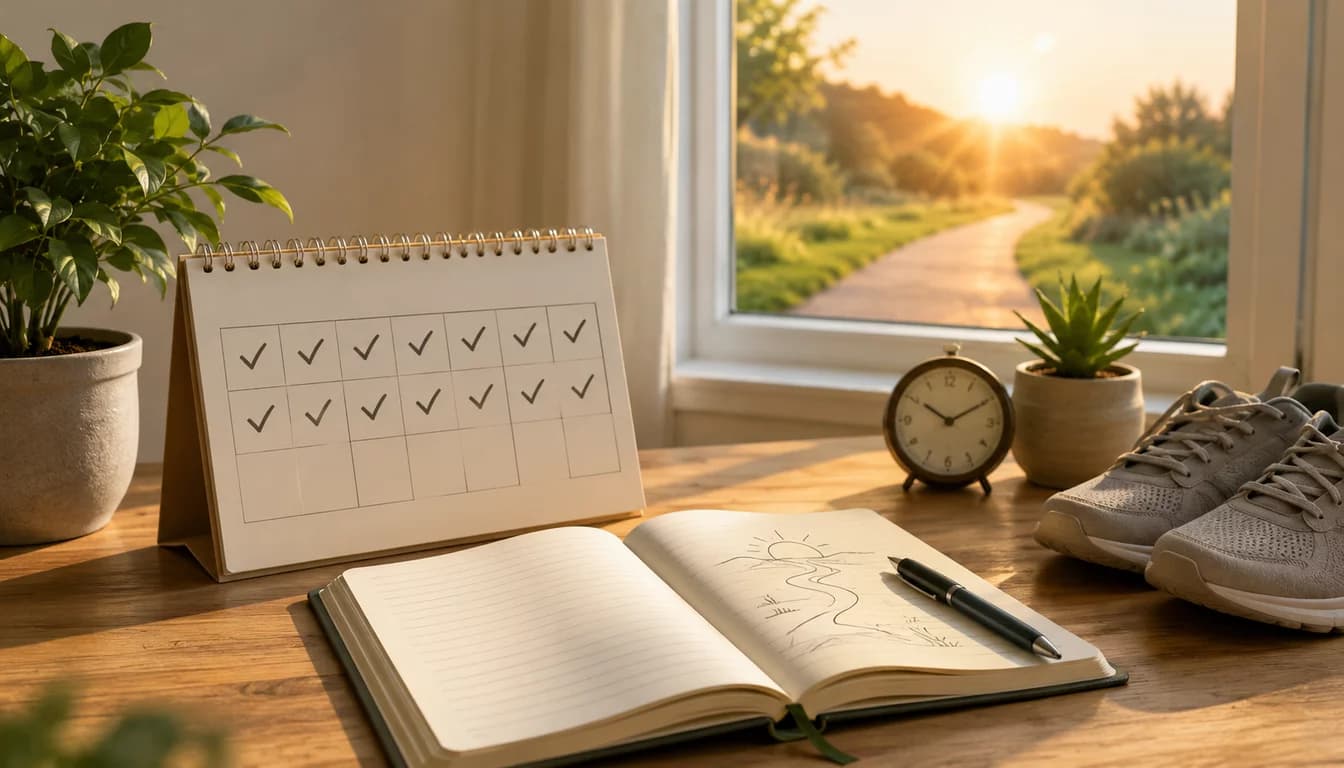
Two Weeks No Alcohol: What's Real, What's Next
Written by Jakub Havelka
Software engineer · 10+ years in recovery · Author of the Craving Toolkit
The fourteenth night is quieter than you remember evenings being.
You poured no glass. You did not stand in front of the fridge debating with yourself for forty minutes. You are noticing things again. The taste of food. The fact that you wake up before your alarm. The strange flatness that sits where the wine buzz used to live around 8 PM.
Two weeks. It counts.
It also doesn't mean what the wellness articles say it means. Two weeks without alcohol is a real biological milestone, and it is also one of the most psychologically dangerous points in early sobriety, because day 15 is when the addictive voice gets clever.
This piece is for the person standing on that ledge. What has actually changed in your body. What has not. And what you do now so you don't quietly walk back into the thing you just got free of.
What two weeks without alcohol actually does to your body
By the end of week one, the worst of acute withdrawal is usually over for most drinkers. The shaking, sweating, racing heart, panic spikes, and disrupted nervous system that peak in the first few days are mostly behind you. Sleep is no longer a horror show every night, though it isn't repaired either.
By the end of week two, more changes have stacked up:
- Liver enzymes have begun to fall back toward normal - Blood pressure has started to drift down - Hydration has returned, which usually shows in your skin and eyes - Stomach lining and gut inflammation have begun calming - Many people notice early weight loss, mostly water and reduced caloric intake from alcohol - Resting heart rate often comes down a notch
None of this is dramatic from the outside. From the inside, it can feel like the lights coming back on slowly in a building that has been dark for years.
You may also still be dealing with lingering effects. Light sleep. Vivid dreams. Afternoon fatigue. Random anxiety waves. Restless legs and night sweats sometimes persist past the two-week mark before fully resolving. None of this means recovery isn't working. It means your nervous system is still recalibrating.
If you're still in heavy acute withdrawal at two weeks (visible shaking, hallucinations, severe confusion, any seizure activity), that is not a normal trajectory. Get evaluated by a clinician. SAMHSA's 24/7 helpline is 1-800-662-4357 if you don't know where to start.
What two weeks doesn't fix
Two weeks is not enough time to rebuild the dopamine system that alcohol pulled down.
In her clinic, Anna Lembke uses a similar window with cannabis patients. She tells them the first two weeks of abstinence will feel worse than continuing to use, but if they can hold through that, the second two weeks usually start to feel better. Alcohol follows a comparable arc with a longer tail. The reward system has been trained for years to expect a chemical floor. Pulling that floor out leaves the room emptier than it was before, and the emptiness takes weeks to months to repopulate with normal pleasure.
This is why life at day 14 can feel oddly underwhelming. You did the hard thing. The reward is supposed to be what, a slightly better morning?
Anhedonia is normal at this point. So is irritability. So is a feeling that sober life is fundamentally less interesting than you remembered. That feeling is not the truth about sobriety. It is the temporary state of a brain whose reward floor is still under construction. Naming it helps.
The grief is also real. If you drank for years, the drinking was tangled into your social life, your transitions, your sense of being off-duty. Losing that takes mourning, not just abstinence.
The day 15 trap
Here is what I learned in rehab about the two-week mark, and what the recovery literature confirms repeatedly: this is when the addictive voice gets articulate.
Around the two- to three-week mark, the voice in your head that wants to drink stops sounding desperate and starts sounding reasonable. It does not say "I need a drink right now." It says things like:
- "Maybe my drinking was never that bad." - "I've proved I can stop. I could probably moderate." - "I deserve a reward for two weeks." - "I'll have one this weekend, then go right back to not drinking."
This is the most dangerous voice in early sobriety, because it sounds like your normal thinking. It is not. It is the same loop the drinking carved into your brain, dressed up in adult language.
Charles Duhigg describes why this matters at the neurological level. The cues that triggered your drinking (the time of day, the stress signals, the social setups, the emotional states) have not gone anywhere in fourteen days. The pathway from cue to craving to drink is still wired. You have only stopped completing the loop. The cue still fires. The wanting still rises. Drinking once at day 15 does not "test moderation." It reactivates the entire trained circuit and hands it back its power.
The two-week mark is a foundation, not a finish.
What to do after day 14
A few specific moves protect day 15 and the weeks after.
Decide before the moment. Write down what you will do the next time the moderation voice gets clever. The decision needs to exist on paper before the craving hits, not be invented in the moment your brain is most compromised.
Replace, don't subtract. Duhigg's research on AA shows that what works is not removing the drink but giving the same cue a different routine that delivers a similar reward. The 6 PM stress cue still needs an answer. If your answer is "white-knuckle through nothing," your brain will eventually pick its old answer back up.
Protect sleep first. Sleep is still rebuilding for weeks after the last drink. Caffeine late in the day, late screens, and irregular bedtimes will keep you trapped in shallow sleep that makes everything else harder. This is the highest-leverage variable in early recovery.
Eat actual food on a schedule. Blood sugar crashes mimic anxiety, and anxiety mimics craving. Three real meals a day quietly removes a category of false alarms.
Find one person who knows. Recovery in isolation is brittle. You don't need a sponsor or a meeting tomorrow, though both help. You need one human being who knows you are doing this and can hear from you when the moderation voice gets loud. If that person doesn't exist in your life right now, the SAMHSA National Helpline (1-800-662-4357) is free, confidential, and open 24/7.
Watch the social pressure. The first sober events feel strange. The strangeness fades. The pressure to drink at them does not, so have a non-alcoholic answer pre-loaded and a way to leave early if you need one.
What two weeks actually means
It means you proved your body can do this.
It means you have data. You know what your sleep does in week two. You know what your evenings feel like without a glass. You know what the moderation voice sounds like when it shows up.
It does not mean you are done. It means you have something to build on, and the building is the next several months, not the next two weeks.
You are at the part of the climb where the air starts to thin and the view gets clearer. The summit is further than it looks. Keep going anyway.
Sources
- Lembke A. Dopamine Nation: Finding Balance in the Age of Indulgence. Dutton, 2021. - Duhigg C. The Power of Habit: Why We Do What We Do in Life and Business. Random House, 2012. - Substance Abuse and Mental Health Services Administration. National Helpline, 1-800-662-4357. samhsa.gov
The Craving Toolkit includes a printable Emergency Card and a Slip Response protocol designed for the exact moment the moderation voice starts sounding reasonable.
Frequently Asked Questions
- What happens to your body after two weeks without alcohol?
- By day fourteen, acute withdrawal is usually behind you. Liver enzymes start moving toward normal, blood pressure drifts down, hydration returns, and gut inflammation calms. Sleep improves but is not fully repaired. Anxiety waves, vivid dreams, and afternoon fatigue can still show up. The visible changes are subtle. The internal recalibration is real.
- Is it safe to stop drinking alcohol cold turkey?
- For light or moderate drinkers, usually yes. For heavy daily drinkers, no. Alcohol withdrawal can include seizures and delirium tremens, which are medical emergencies. If you have been drinking heavily every day for months or years, talk to a clinician before stopping. SAMHSA's 24/7 helpline is 1-800-662-4357 and can refer you to detox services.
- Will cravings be gone after two weeks of no alcohol?
- No. Acute physical cravings ease in the first week. Psychological cravings often get more articulate around the two-week mark, when the addictive voice starts proposing moderation as a reasonable idea. This is normal. Cravings continue to surface for months, gradually losing their intensity. Two weeks is not the end of cravings. It is the beginning of learning to handle them sober.
- Should I try moderate drinking after fourteen days sober?
- For most problem drinkers, no. The neural cues that triggered your drinking are still wired after two weeks. A single drink at day fifteen reactivates the trained loop. If you are unsure whether you can moderate, the fact that you are asking is information. Talk to a clinician or call SAMHSA at 1-800-662-4357 before testing it alone.
- How long until sleep recovers after quitting alcohol?
- Sleep starts improving in the first week and continues repairing over weeks to months. REM sleep, suppressed by alcohol, often rebounds in the form of vivid or unsettling dreams. Deep sleep returns gradually. Some people sleep well by week three. Others take longer. Caffeine timing, a consistent bedtime, and limiting late screens accelerate the process.
- What should I do after reaching 14 days without alcohol?
- Decide now what you will do the next time the moderation voice gets clever. Protect sleep, eat on a schedule, and keep the routines that have been working. Tell one person you trust where you are. Plan your first sober social events with a non-alcoholic drink in hand and an exit strategy. Build the next month before you build the next year.